Trader's Blog Contest For March

"Is The Government's Spending Out Of Control?"

Yes, No... Don't Care? The new administration is tossing around billions of dollars, but are the allocations justified? Do you think that the proposed stimulus package is money worth spending, or do you think that things have gotten out of hand?

Just answer... Yes, No, or Don't Care (specific opinions optional)  to be entered in a drawing for the prize below.

Prize

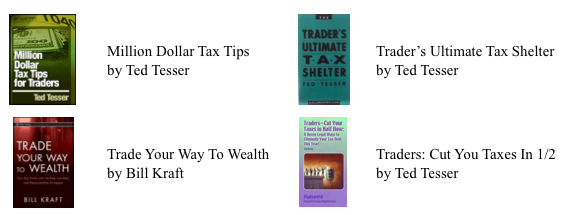
Winner will receive 3 DVD workshops on Taxes & Trading from our authors in INO TV and a hardback copy of "Trade Your Way To Wealth" by Bill Kraft. If your comment is drawn, your prize will be mailed to you courtesy of INO TV. No shipping, no handling, no catches.

How To Enter:

Comment on this post telling us if you think that the government's spending is out of control. Just write YES or NO, but feel free to voice your opinion... just keep it clean!

Rules

1. This contest is open until 11:59 PM on March 31st, 2009.

2. No wrong answers, any participation counts as an entry.

3. One entry per email address.

4. Winner will be picked by random integer software.

5. Winner will be contacted on Thursday, April 2nd, 2009 via email.

Good luck!

Buy-And-Hold No Longer Gold?

When I first contacted Christopher Hill, editor of Investorazzi.com, about doing a guest blog post he jumped at the chance and hit me with his idea for an educational post for our members. Truthfully this post is a LONG time coming. It delves into the Buffett world. Now most people either love his style or think he's just lucky.

Well read the article below and make your comments and thoughts known. Do you think Buffett will survive? Do you think Faber is crazy? Whatever it is let's get the comments rolling as this is a great topic.

=====================================================================

Legendary stock investor Warren Buffett has been in the news a lot lately.  This past weekend, the noise was all about Berkshire Hathaway, Buffett’s investment holding company.  The Bloomberg website reported Saturday:

“Warren Buffett’s Berkshire Hathaway Inc. posted a fifth-straight profit drop, the longest streak of quarterly declines in at least 17 years, on losses from derivative bets tied to stock markets.

Fourth-quarter net income fell 96 percent to $117 million, or $76 a share, from $2.95 billion, or $1,904 a share, in the same period a year earlier, the Omaha, Nebraska-based firm said in its annual report. Book value per share, a measure of assets minus liabilities that Buffett highlights in his yearly letter to shareholders, slipped 9.6 percent for all of 2008, the worst performance since Buffett took control in 1965.”

As if this wasn’t enough bad news, earlier this week it was revealed that Berkshire Hathaway, which lists more than 70 operating businesses in its latest annual report to shareholders, is cutting manufacturing jobs and closing facilities.

Due to all the bad headlines, some are starting to question if the “Oracle of Omaha” is starting to lose his magic touch.  And investors, in particular, wonder if the buy-and-hold investing strategy, which Buffett is known to champion, is ineffective for these volatile times.

One veteran investor who openly questions the buy low, sell high approach to stocks these days is Dr. Marc Faber, otherwise know as “Dr. Doom” by the financial press.  Faber, who publishes the “Gloom Boom & Doom” report, predicted the current financial crisis and is famous for telling his clients to get out of U.S. stocks a week before the October 1987 market crash.  Back on December 1, Faber said the following on CNBC regarding the buy-and-hold strategy:

“We’ve moved into an environment of very high volatility where you will have up and down moves of, like, 20 percent all the time and that is a traders’ market… The Warren Buffett approach is dead and it’s been dead for ten years and it’s going to be dead for another ten years… We can have huge rebounds and then huge downturns again and I think the best for the average investor is to play it relatively in small amounts and not gear up and take big risks.”

Is Dr. Faber correct in his assertion that the stock market is now a traders’ market?  Buffett’s critics might say so, and point to the performance of his investment vehicle as proof.  Yet, I still remember those who dismissed Buffett as being over-the-hill in the late nineties due to his avoidance of technology stocks.  And what ever happened to these individuals?  Recently, Marc Faber has been calling for a rebound in equities.  Just last week, he told investors gathered in Tokyo:

“A countertrend rally could occur soon where stocks would suddenly rise quite substantially.”

If Faber is right and equities rally, then fall again significantly, expect the strategy, and poster boy, of buy-and-hold investing to come under even more fire down the road.

Christopher E. Hill
Editor
Investorazzi.com
“Tracking The World’s Greatest Investors”

February Trader's Blog Contest Winner

There were 184 eligible entries (excluding duplicates) for the February Trader’s Blog Contest. Thank you for everyone who participated. Everyone had a strong view of which market would be 2009's "hot mover."  So check back with us to see if you were the one with most market intuition.

The lucky winner of 6 seminars from our INO TV digital library was comment number 57…

Manisha S. of Irvine, California

Congrats,

The INO TV Team

Bloody Monday ... It's Not Going To Be Pretty With News Like This

WIth the markets closing on or close to their lows on Friday, this news is like pouring water on a drowing man. In other words, this is not the sort of news that is going to bolster the market.

Fasten your seat belts, it's going to be a bumpy ride.

Adam Hewison

President, INO.com
Co-creator, MarketClub

This from our business news partner AP.

AIG to get up to $30B more in Fed aid

By IEVA M. AUGSTUMS

AP Business Writer(AP:CHARLOTTE, N.C.) Struggling insurer American International Group Inc. will receive up to $30 billion in additional federal assistance in the fourth government rescue of the company, people familiar with the matter told The Associated Press on Sunday.

The new infusion is intended to prop up AIG _ once the world's largest insurer _ as it is expected to announce $60 billion in quarterly losses early Monday, a person said on the condition of anonymity because the discussions are still ongoing.

The company, which is considered too large to be allowed to fail, previously received about $150 billion in loans from the government, which currently holds an 80 percent stake in the company.

Under the new deal, the U.S. Treasury and the Federal Reserve would provide about $30 billion in fresh capital to AIG from the government's Troubled Assets Relief Program, or TARP. The money would be provided as a standby line of equity that AIG could tap as its losses mount, the person said.

AIG has already received $40 billion from TARP.

The new plan also calls for the Federal Reserve to take stakes in two international units, the person said.

Instead of paying back $38 billion in cash with interest that it has used from a Federal Reserve credit line, AIG now will repay that amount with equity stakes in Asia-based American International Assurance Co. and American Life Insurance Co., which operates in 50 countries.

The $20 billion to $25 billion remaining on the Federal Reserve credit line will be available for borrowing, the person said.

In order to strengthen the company, AIG also plans to combine its U.S. and foreign property-casualty insurance operations into a new unit, with a new name and separate management, the person said. About 20 percent of the property-casualty business would be taken public.

To further reduce its debt, AIG will turn $5 billion to $10 billion worth of debt into new securities backed by life insurance assets.

The decision to approve a third revision of the AIG bailout is a continued bet by the federal government that there would be even greater risk to letting AIG fail, a person familiar with the Treasury's decision told The Associated Press on Sunday.

Federal officials feared that a bankruptcy of AIG could be disastrous for the global economy, which is in worse shape than it was six months ago, the person said, requesting not to be named because the talks are ongoing. Talk of the new rescue package has been going on for several weeks, as the Treasury gained insight of AIG's quarterly performance, the person added.

AIG spokesman Nick Ashooh declined to comment on the rescue package. The Federal Reserve Bank of New York, which is handling the government loan, did not return requests for comment Sunday evening. Treasury Department spokesman Isaac Baker also declined to comment.

The company's board met Sunday to vote on the revised bailout plan.

Major credit rating agencies have already signed off on the deal, according to media reports. Without the support of the credit rating agencies, AIG would have faced crippling cuts to its ratings.

AIG has been forced to seek more help in part because of the ongoing recession and its falling stock price, now well under $1. Among its biggest problems: It can't sell assets to pay back government loans because the credit crisis is preventing would-be buyers from getting financing to complete such deals.

As of Feb. 13, AIG had sold interests in nine businesses.

In November, the U.S. government restructured previous loans provided to AIG, giving the company about $150 billion in total as part of a rescue package to help the insurer remain in business amid the worsening credit crisis. That package replaced earlier loans, including the original $85 billion lent in September, after it became apparent the insurer needed more funds.

Problems at AIG did not come from its traditional insurance operations, but instead from its financial services units, and primarily its business insuring mortgage-backed securities and other risky debt against default.

Shares of AIG closed at 42 cents on Friday. The stock, which traded at $49.50 a year ago, has lost nearly all of its value since the market meltdown began in September.

What is a Successful Trader? (you must have a CLEAR answer to this question)

Adam and I have known Norman for a very long time. We've worked with him on many occasions and have spent time with him and his materials. We both agree that his trading wisdom and mental discipline go far beyond his years (No offense Norman), and I can confidently say that Norman Hallett is known as the Internet's leader in helping traders with their trading discipline.

I can say that because there are hundreds of INO members who are have taken part in Norman's training and coaching. Today he's launching a new class and has 4 Special Reports on trading discipline that I'd like to offer to you for no cost. Grab the reports HERE.

I also asked him to present us with a scenario as to what makes a successful trader. Below are two examples and Adam, Norman, and I would like for you to comment as to which person you think is a successful trader and why.

==================================================================

“Success means having the courage, the determination, and the will to become the person you believe you were meant to be”- George Sheenan

The Caribbean water is crystal clear and inviting as you sail on toward Tortola. Your cell phone rings and it’s your broker in New York. You listen intently and then say “sell and transfer the funds to my commodities account”. You disconnect and do a feeble fist pump and mutter, “cha ching”.

You are in the waiting area at JFK. Your flight to Hawaii leaves in an hour. As you don’t want to be disturbed, you re-check today’s positions and stops and close the laptop. You’re taking your family on a winter escape to paradise. No clients to worry about. No office politics. Just you and your laptop have made it all possible. You look at the Armani crowd and remember what it was like before you were able to work in your jogging suit. “No risk….no reward”, you say to yourself.

You are up in your “command center” as you and your spouse jokingly call it. You hear your children and husband getting the kids ready for school. He lives the buttoned down life and you are still in your robe. You’ve been up before the markets open and are in the midst of planning today’s trades. Yesterday wasn’t a fun experience; you didn’t make your daily goal and your win-loss was upside down. You try not to think about it prefer to focus on setting up for today’s trading. You come down from the command center to say goodbye to hubby and the kids; your mind is still focused on the three trades you plan to make as soon as the entry points presents themselves. Your husband starts to say something and you hold up your hand to stop him. “Don’t say a darn thing, you know the rules.” He smiles and herds the kids to the car. With coffee in hand, you bless the skills you have acquired but curse the loneliness of the isolation. But there is no other way you have the possibility to make the kind of money you can earn by trading and your husband makes enough to pay the bills.

But both you and your husband have a dream of moving out of the city and out of the rat race. You both want a better home and are able to send your kids to the best schools possible. As withholding and social security taxes are sucked right out of your husband’s paycheck, accumulating wealth is almost impossible. but becoming a successful trader may be the only way to reach those dreams and ambitions. Up until now, you have been able to actually make fairly steady profits in your trading accounts and you feel that after three years of full time day trading , you seem to have what it takes to make a go of it. But the pressure and isolation can become intense.

Which one of these scenarios is a more realistic picture of a “successful trader”?

Success is defined by the achievement of pre-established goals. The key to becoming a successful trader is identifying, quantifying, strategizing, implementing, tracking, analyzing, learning and growing as a conscious person. You see, there is no such thing as “easy money”. Let’s get this upfront right now, trading is not easy and not for just anybody.

How many people do you know who have an idea of what they want out of life? How many people do you know who understand what makes them happy and what fulfils their needs? Probably not many and this is where becoming a successful trader begins…..understanding yourself. You define what success means to you. If you don’t know what that is, how can you reach it?   Indeed, this process of defining what a successful trader means to YOU, lies at the heart of building a trading plan for success.

Norman Hallett
-----------------------------------------------------------------------------------

We're looking forward to your comments and before you comment be sure and grab Norman's 4 Special Reports HERE.