Three Silver Miners On The Sale Rack

While the gold price has managed to hold onto most of its Q1 gains amid the market turmoil, the silver price has not fared nearly as well. In fact, the metal is sitting at a (-) 5% year-to-date return after briefly being up 16% for the year at its March highs. This retracement in the silver price has put a severe dent in margins for silver producers, explaining why the silver miners have significantly underperformed the metal. However, with the Silver Miners Index (SIL) now down nearly 50% from its Q3 2020 highs, this negativity related to weaker margins looks to be mostly priced in, suggesting it’s time for investors to be open-minded to a bottom in the higher-quality names. Let's take a look at a few of the top names sector-wide below:
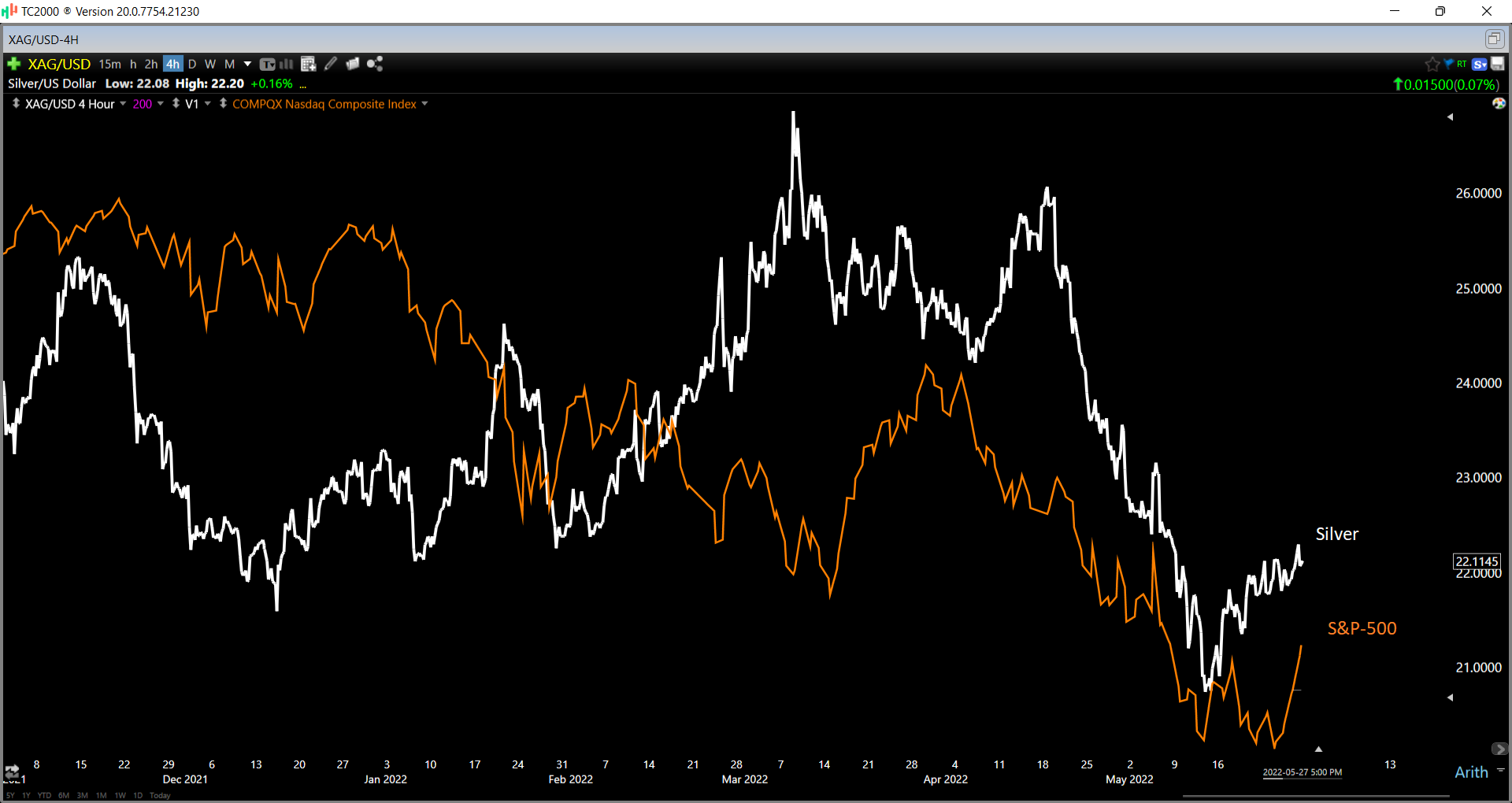
Silver Daily Chart

Source: TC2000.com

Many investors prefer to invest in SIL or the physical metal when it comes to gaining exposure to silver, but neither the ETF nor metal pay dividends and the former is full of poorly run companies with razor-thin margins. For this reason, investing in SIL is even worse than investing in the Gold Miners Index (GDX), where at least the latter has a decent portion of solid companies which balance out the laggards. Given the low quality of SIL, the best way to invest in silver is by selecting the best names sector-wide, and three names that stand out are Continue reading "Three Silver Miners On The Sale Rack"

Using Leverage & Risk Management to Win Big in Today's Market

Our very own Trader Travis, former U.S. Investing Champion and creator of the MarketClub Options Blueprint, joined Adam Mesh last week to discuss the current market environment and how he's been able to fair so well.

Mesh invited him for good reason, Travis' last three trades generated a 41%, 43%, and 87% ROI for SPY, LLY, and NUE, respectively. Travis will show you exactly how and why he selected, entered and exited those trades.

Loading the player...

Believe it or not, this is actually the exact same strategy he uses in up, down, and even sideways markets and he has never had a losing year since its inception in 2015.

But ultimately, what's JUST as important as making money when the market is as unstable as it is now? Protecting it!

He'll show you how to use his 2/10 formula so you never "blow out" your account, yet still be able to capture double and even triple-digit gains.

Once you check out the webinar, don't miss this special offer! (It is supposed to be reserved for current members, but we're sneaking you this link!). Lock in a very special offer AND a 30-day money-back guarantee!

It's Time To Arm Your Portfolio

Today, in 2022, there are 27 ongoing armed interstate and civil conflicts occurring; while there is a moral and ethical perspective to be had while analyzing the state of military affairs in the world, there is also an economic one. Fun fact: It costs $100,000 per year to maintain each soldier within the United States Armed Forces, and this number will only continue to increase as the push from the supply side and pull from the demand side increase this input. As it is already a fact that inflation and the commodity price rally have pushed costs higher from the supply side, one can make a good bet on the fact that the need for armaments will also increase as the volume and magnitude of conflicts grow.

In this arena, a name stands out from the rest...

The Lockheed Martin Corporation (LMT) is one of the largest defense contractors in the world. Some of their recent notable projects include; the F-35 Lightning 2, the F-22 Raptor, and the Stalker VXE Unmanned Aerial System. Their subsidiaries include helicopter manufacturer Sikorsky, R&D agency Zeta Associates, & technical services provider Sytex inc. Lockheed Martin is one of the few contractors trusted by the US armed forces and NASA, as it, through the Skunk Works division, has been working on black projects for the US armed forces since World War Two. Some of their previous successes include the SR-71 Blackbird and the U-2 Spy Plane. Continue reading "It's Time To Arm Your Portfolio"

Historical Bear Market Comparisons

2022 Bear Market

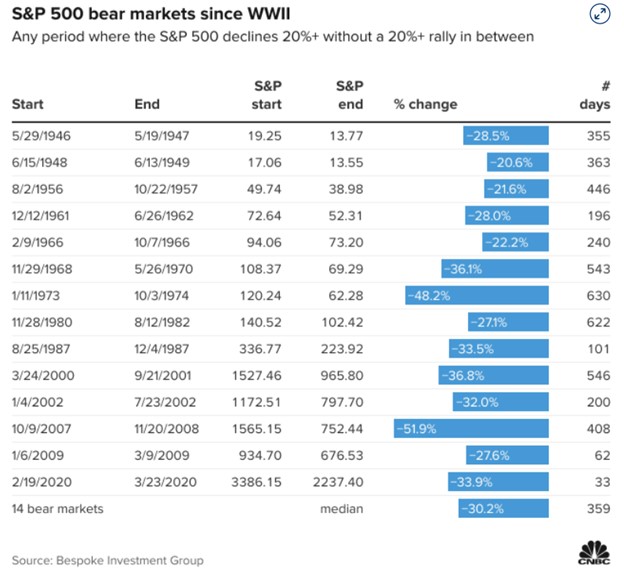
Although there’s not an official bear market definition, those on Wall Street define a bear market as a 20% drop in the broader index. As of late May, the Nasdaq, Russell 2000, and S&P 500 have all breached that 20% sell-off threshold. This bear market is largely due to a confluence of the China Covid lockdowns, the Russia/Ukraine war, persistent inflation, and rising rates. All these bear market inputs are eroding companies’ margins and negatively impacting profitability and growth.

Looking at historical bear market comparators, there’s been 14 since World War II. The S&P 500 has pulled back a median of 30% and the selling has lasted a median of 359 days, per Bespoke Investment Group. It’s important to put the median in a statistical context, median translates into half the time the index has fallen more than 30% while half the time the index has remained above the 30% sell-off level. The 2022 bear market is only 136 days in as of March 20th, 2022. Although the median values suggest these markets may have a way to go, the resolution of one or a combination of the macroeconomic issues may be the needed catalyst for the bears to capitulate.

Bear Market Comparison

Markets On Edge

It's been challenging to endure the last five months of indiscriminate and relentless selling across all asset classes. The wealth destruction has been vast and safe haven stocks have been few and far between at this stage of the bear market. The bear has finally mauled Walmart (WMT), Apple (AAPL), and the flight to safety commodity, Gold (GLD) in its path of destruction. Continue reading "Historical Bear Market Comparisons"

As Inflation Signals Cool, Various Markets Get Relief

Whether a bounce or something more extended, a bear market rally was bound to get off the ground sooner or later. It was a matter of time, with stock market sentiment this over-bearish.

Here is how the US Stock Market segment led off last weekend in NFTRH 706:

bear market

We then covered the technically bearish state of the major indexes, which are clearly trending down on longer time frames. Sentiment is a tool. TA is a tool. Macro fundamentals are another tool. These tools and others should be used together to refine probabilities in the markets. Continue reading "As Inflation Signals Cool, Various Markets Get Relief"