
Contest has been closed as of 2/1/09.
The contest couldn't be any easier this month... acutally, every month is very easy. This month so you can win two ways... one way by luck and one way by skill.
Just answer the question and we'll put your name in the hat to win the prize below. If you guess ends up being closest to the actual value then you can win too.
So the question is…
"Where will the DOW close at the end of the 1st quarter of 2009?"
Will it land on 7,900 or at 11,532? It may seem like a shot in the dark now, but where do you think the DOW is headed? Enter a number and you will be put in for our drawing of the prize below.
Prize
Winner will receive 6 workshops on charting from our authors in INO TV. These MP3s and digital PDF workbooks will be mailed to you courtesy of INO TV. No shipping, no handling, no catches.
A special prize will be given out to the person with the answer closest to the actual close (winner will be notified April 1st, 2009 via email).
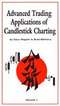 |
Advanced Trading Application Candlestick Charting Volume 1 - Gary Wagner & Brad Matheny |
|
Advanced Trading Application Candlestick Charting Volume 2 - Gary Wagner & Brad Matheny |
 |
Practical Applications of Candlestick Charts - Gary Wagner |
 |
Bollinger Bands: Construction & Implementation - John Bollinger |
 |
Point & Figure Charting - Tom Dorsey |
 |
Finding Tops & Bottoms Using The NYSE Tick Index - Tim Ord |
How To Enter:
Comment on this post telling us what price you think the DOW will close at on March 31, 2009 at 4:00 pm (EST). You have only until the end of January to answer, so think longer-term on this one.
—
Rules
1. This contest is open until 11:59 PM on January 31st, 2009.
2. No wrong answers, any participation counts as an entry.
3. One entry per email address.
4. Winner will be picked by random integer software.
5. Winner will be contacted on Friday, February 4th, 2009 via email.
6. Special Prize winner will be the numerical value closest to the official close listed on INO.com.
–
Good luck!

 PDF Workbook
 Perry J. Kaufman is a market strategist known for his knowledge and experience in computer-based trading systems applied to world futures and financial markets. His publication, The New Commodity Trading Systems and Methods (John Wiley & Sons, 1987), has become the technician’s required reference. In 1984, he published the comprehensive Handbook of Futures Markets (Wiley). An earlier book of research papers, Technical Analysis in Commodities (Wiley, 1980), has been translated into Japanese. Perry founded the Journal of Futures Markets (Columbia University and John Wiley & Sons), a vehicle for gathering academic research on market analysis. He is series editor of Wiley’s Trader’s Advantage, and his latest book, Smarter Trading, was released by McGraw-Hill in 1995. Perry specializes in the application of technical and fundamental (statistical) analysis to the development of trading and risk management programs for both commercial and private investors. Much of this work is based on price theories and techniques he has researched and developed since 1971. He combines the ability to integrate computer technology and strategic allocation with traditional investment approaches in order to achieve realistic objectives. Perry is particularly interested in closing the gap between theoretical and actual results, concentrating on the world’s stock index, foreign exchange, interest rates, and energy markets. Perry is director of research for Kaufman, Diamond, and Yeong, a consulting firm serving the financial industry in the United States and Singapore. In addition to providing risk management, education, and training, the firm publishes Kaufman on Market Analysis, a periodic report on the applications and development of trading strategies. In Singapore, the company provides market-related educational services and is developing trading strategies using new technologies (such as neural nets and artificial intelligence) under a grant from the Singapore government.
 Richard Lees is president of Richard Lees Capital Management, a registered investment advisory in Los Angeles’ Studio City area, where his clients include members of the entertainment industry and other high net-worth individuals. He edits and publishes 21 Forward, a monthly investment newsletter and journal that offers uniquely detailed and unusual discussion of markets. The newsletter also gives specific recommendations for implementation of his proprietary pH-Indicators to profit from those markets. Richard was educated at Stanford, the University of Michigan, and Yale, and he has written about financial analysis for industry publications such as Barron’s, always exhibiting his trademark style of sharp wit and truly contrarian commentary. With a degree in psychology and a career as a professional writer, trading—or turning perception into money—came naturally to him. An active trader since 1982, Richard was one of the first to use sophisticated trading analysis software. His methods have shown consistency and sometimes startling accuracy in the stocks, options, and the forward markets." alt="null" />Richard Lees is president of Richard Lees Capital Management, a registered investment advisory in Los Angeles’ Studio City area, where his clients include members of the entertainment industry and other high net-worth individuals. He edits and publishes 21 Forward, a monthly investment newsletter and journal that offers uniquely detailed and unusual discussion of markets. The newsletter also gives specific recommendations for implementation of his proprietary pH-Indicators to profit from those markets. Richard was educated at Stanford, the University of Michigan, and Yale, and he has written about financial analysis for industry publications such as Barron’s, always exhibiting his trademark style of sharp wit and truly contrarian commentary. With a degree in psychology and a career as a professional writer, trading—or turning perception into money—came naturally to him. An active trader since 1982, Richard was one of the first to use sophisticated trading analysis software. His methods have shown consistency and sometimes startling accuracy in the stocks, options, and the forward markets.
