Why investors aren't impressed with profits

By BERNARD CONDON and PAUL WISEMAN
AP Business Writers

(AP:NEW YORK) When it comes to happy surprises on Wall Street, it's hard to get better than this.

U.S. companies made more money in the first three months this year than almost anyone expected. As earnings reports roll in, they're beating the estimates of stock analysts at a rate not seen in more than a decade.

Yet stocks have languished. The Standard & Poor's 500 index has fallen about 2 percent in April. So why aren't investors impressed?

For starters, earnings season has just begun. The real test is the next two weeks, when more than 300 companies in the S&P 500 report. Apple, the most valuable company in the world, reports Tuesday.

Topping estimates is no great feat. Publicly traded companies do it almost every quarter. They tell analysts to expect a number the companies know will be low. Then they can enjoy a "pop" in their stock price when _ surprise! _ they clear the hurdle.

And this quarter, it's not much of a hurdle. Just a month ago, companies got analysts to expect first-quarter earnings to grow so little you'd need an electron microscope to spot the rise _ just 0.5 percent. Continue reading "Why investors aren't impressed with profits"
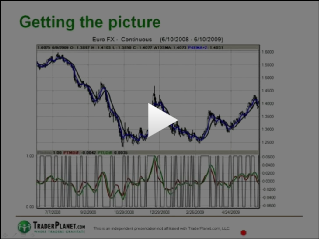
Strategy Trading Using Next Day Predictive Highs and Lows

We get a lot of questions here at MarketClub about how to use highs and lows to predict market movement. As a treat to our Trader’s Blog readers we have asked Darell Jobman, a leading expert in technical analysis to share some his techniques. In this video workshop you’ll discover how to putting indicator clues together to identify setups for a new trend. Darrell has been writing about financial markets for more than 35 years and has become an acknowledged authority on derivative markets, technical analysis and various trading techniques.


Watch Now:Spotting Breakouts That Lead To Trend Reversals


Best,
The INO Team

Poll: Speculation to blame?

This week Obama proposed new measures to limit speculation in the oil markets. The new proposals would require oil traders to put up more of their own money for transactions, ask for more money for market enforcement and monitoring activities, and call for higher penalties for market manipulation. The impact that speculation, or investment money, is having on oil prices is a subject of much debate. So we wanted to ask.....

Do you think speculation is to blame for high oil prices?

View Results

Loading ... Loading ...

As always we would love to hear your thoughts on this topic.

Every Success,

The INO Team

It's Friday, are you going home long the markets this weekend?

Hello traders everywhere! Adam Hewison here, co-founder of MarketClub with your mid-day market update for Friday, the 20th of April.

3 stocks on the move today:
E*TRADE Financial Corp. (ETFC), Microsoft (MSFT), and Schlumberger NV (SLB).
Did MarketClub's Trade Triangle technology get it right on these three stocks?

DON'T FIGHT THE MARKET … MOVE WITH THE MARKET! Continue reading "It's Friday, are you going home long the markets this weekend?"

How Far to the Wall?

By Terry Coxon, Casey Research

Decades of manipulation by the Federal Reserve (through its creation of paper money) and by Congress (through its taxing and spending) have pushed the US economy into a circumstance that can't be sustained but from which there is no graceful exit.

With few exceptions, all of the noble souls who chose a career in "public service" and who've advanced to be voting members of Congress are committed to chronic deficits, though they deny it. For political purposes, deficits work. The people whose wishes come true through the spending side of the deficit are happy and vote to reelect. The people on the borrowing side of the deficit aren't complaining, since they willingly buy the Treasury bonds and Treasury bills that fund the deficit. And taxpayers generally tolerate deficits as a lesser evil than a tax hike.

Deficits are politically convenient for a second reason. They can take a little of the sting out of a recession. That effect is transient, and it's not strong – more like weak tea than Red Bull. But it can be enough to help a struggling politician get past the next election.

Yes, sometimes there's a big turnover in the personnel, such as with the 2010 election, when a platoon of self-styled anti-deficit commandoes parachuted into Congress. As soon as they had taken their seats, they began offering proposals to deal with the government's trillion-dollar revenue shortfall. But none of the proposals were serious. They were merely tokens intended to make politicians wearing anti-deficit uniforms look less ridiculous. Cut a ginormous $2 billion out of this program and a great big $500 million out of that program. Reduce spending by half a trillion dollars... over ten years. Balance the budget to the penny, but later. No one proposed anything close to dealing with the deficit now.

So stay up as late as you like on election night to see who wins, but the deficits aren't going to stop anytime soon. The debt mountain will keep growing. The part of it the government acknowledges is now approaching $16 trillion, which is more than the country's gross domestic product for a year. Obviously, the debt can't keep growing faster than the economy forever, but the people in charge do seem determined to find out just how far they can push things. Continue reading "How Far to the Wall?"