Leveraging a minimal amount of capital, mitigating risk, and maximizing returns are paramount as the markets rotate out of the depths COVID-19 sell-off. Options trading offers the optimal balance between risk and reward while providing a margin of downside protection and a statistical edge. Proper portfolio construction and optimal risk management are essential when engaging in options trading as a means to drive portfolio performance. The Q4 2018 and the COVID-19 pandemic are prime examples of why maintaining liquidity, risk-defining trades, staggering options expiration dates, trading across a wide array of uncorrelated tickers, maximizing the number of trades, appropriate position allocation and selling options to collect premium income are keys to an effective long-term options strategy. A risk-defined diagonal put spread optimizes the risk management aspect of an options trade while maximizing return on investment.
Minimizing Risk and Maximizing Return
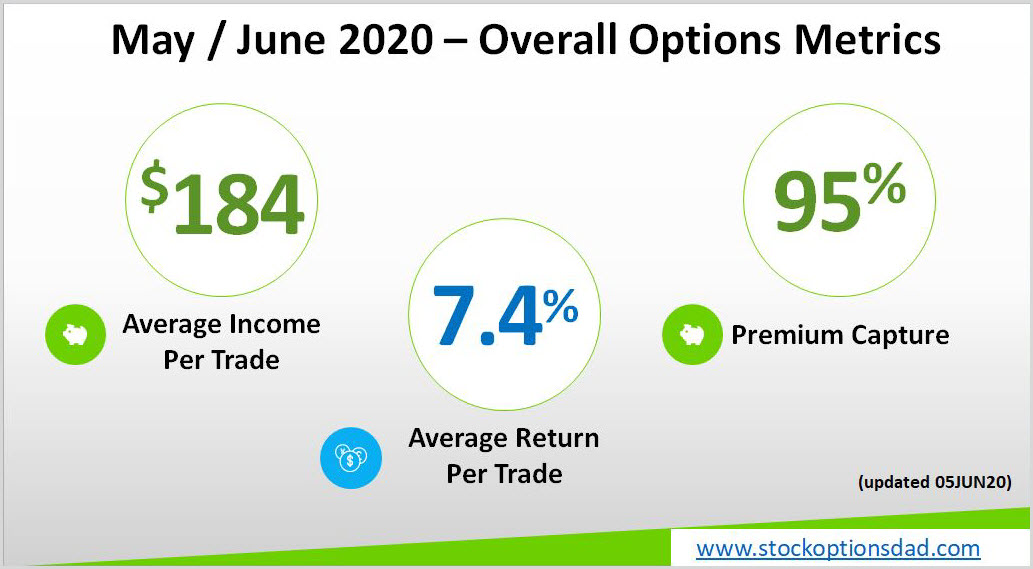
Leveraging a minimal amount of capital and maximizing returns with risk-defined trades optimizes the risk-reward profile. Whether you have a small account or a large account, a defined risk (i.e., put spreads and diagonal spreads) strategy enables you to leverage a minimal amount of capital which opens the door to trading virtually any stock on the market regardless of share price such as Apple (AAPL), Amazon (AMZN), Chipotle (CMG), Facebook (FB), etc. Risk-defined options can easily yield double-digit realized gains over the course of a typical one month contract (Figures 1, 2, and 3).
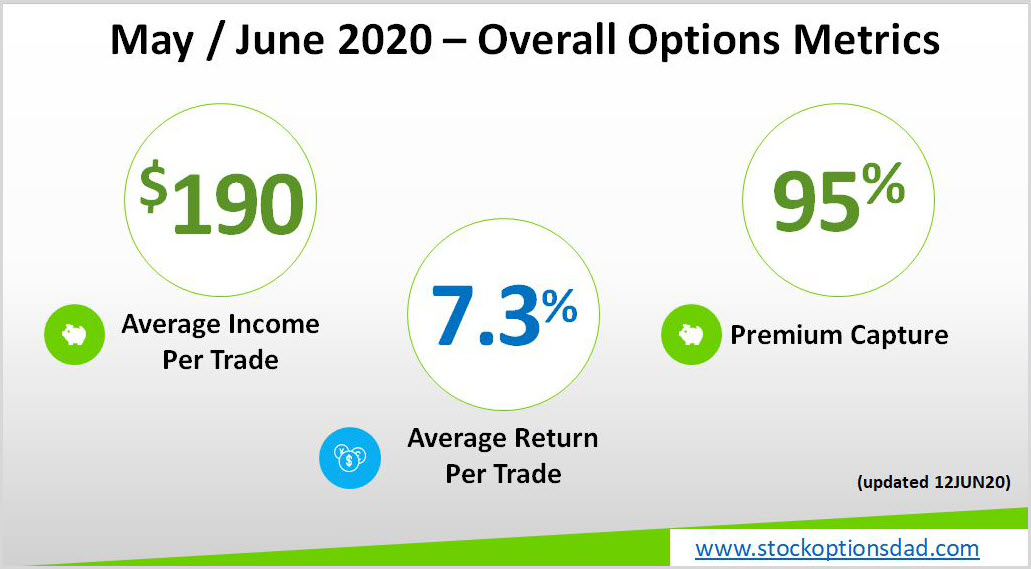
Figure 1 – Average income per trade of $190, the average return per trade of 7.3% and 95% premium capture over 41 trades in May and June
Continue reading "Options Trading - Diagonal Put Spreads Part 2"