Looking Past Powell

Jerome Powell's term as chair of the Federal Reserve doesn't end until next February, but the handicapping of his reappointment has already begun. A recent poll by the Wall Street Journal found that three-quarters of economists it surveyed believe Powell will be renominated by President Biden, but I would argue that the odds are at best 50-50, if not lower.

Powell has unquestionably been friendly to the financial markets, which counts in his favor on Wall Street, but that may be a detriment when it comes to the progressives who are likely to have the biggest voice in choosing the next Fed chair. Right off the bat, Powell checks off none of the boxes that progressives are looking for, and as he has shown since his inauguration, Biden almost never goes against what they want.

Let’s look at Powell’s negatives: He's a white male. He's a Republican. He comes from Wall Street. He's rich (although most people at this level are). Let's also not forget that Powell was nominated to his position by President Trump, which automatically disqualifies him in the eyes of many, never mind the constant barrage of criticism Trump leveled at him once he was seated.

Just the taint of being associated with the former president should be enough to make him unsuitable for another term.

More importantly, however, Powell has not publicly bought into the prized objectives of the left, namely using the Fed to further social policy (i.e., wealth redistribution) and climate change initiatives, asserting that those are political decisions better left to Congress. Continue reading "Looking Past Powell"
Weekly Stock Market Forecast

This week we have a stock market forecast for the week of 7/25/21 from our friend Bo Yoder of the Market Forecasting Academy. Be sure to leave a comment and let us know what you think!

The S&P 500 (SPY)

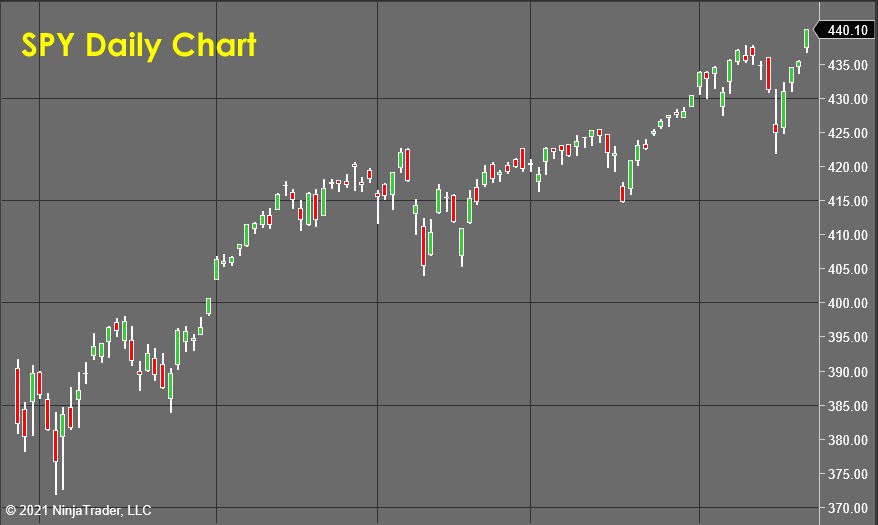
SPY Daily Chart - Stock Market Forecast

Another week of organic bearish sentiment and stimulus bringing bullish energy into the market. These cross-currents make many of the inputs I use to forecast prices buddy and unreliable, so it puts me on the sidelines until the odds for success improve.

Let’s take a minute to unpack the word “odds.”

I want you to think of the markets like a political campaign for governor of a state. Continue reading "Weekly Stock Market Forecast"

Investing In The Guns And Ammo Boom

If you thought lumber prices were high in 2021 or that the US housing market was hot, you might be missing the hottest market and the industry that is seeing the highest price increases; the gun and ammunition industry. In 2020 the US saw record levels of gun purchases halfway through 2021, and there is no slowing down.

In 2020, more than 21 million guns were sold in the US; that’s more than double the number of guns sold 20 years ago. And according to the FBI background checks done thus far in 2021, we are likely to see more than 21 million guns sold this year.

With that many guns being sold, it's not hard to see why ammunition is not only in short supply but why prices are up more than 100% when compared to just two years ago. However, despite ammunition prices rising, some people being interviewed say they would buy more if they could get it. Some gun owners have said it's not uncommon to own thousands of rounds for each different type of gun they own.

So, when you add the two factors together, 21 million new guns sold in 2020, and we are well on our way to see close to, if not more than that, sold in 2021, and of course you need bullets for these millions of guns being sold, maybe not thousands, but at least some. Well then, it makes perfect sense why ammunition is in low supply, high demand, and prices are soaring.
As an investor, how can you benefit from this gun-crazy situation? Continue reading "Investing In The Guns And Ammo Boom"

Market Jitters And The Consumer Price Index (CPI)

The Consumer Price Index (CPI) readings have become a top topic as of late and have directly impacted market movements and overall sentiment. These CPI reports are becoming more significant as these readings are used to identify periods of inflation. More robust the CPI readings will translate into a stronger influence on the Federal Reserve’s monetary policies. The Federal Reserve is reaching an inflection point where they will need to curtail their stimulative easy monetary as inflation, unemployment, and overall economy continue to improve. As a result, their long-term monetary policy of low-interest rates and bond purchases will inevitably need to pivot to a scenario of higher rates to tame inflation. As a result, investors can expect increased volatility as these critically important CPI reports continue to be released through the remainder of 2021. Additionally, any notion of higher rates may spur investors to reduce exposure to equities.

CPI Market Jitters

Recent CPI readings have spooked the markets as these serve as a harbinger for the inevitable rise in interest rates. As investors grapple with the prospect of downstream rate increases, pockets of vulnerabilities throughout the market have been exposed. The overall markets have been on a blistering bull run since the November 2020 presidential election cycle. The overall markets as assessed by any historical measure have reached stretched valuations with record risk appetite. As real inflation enters the fray, these frothy markets will come under pressure and possibly derail this raging bull market. Moreover, the prospect of rising rates may introduce some systemic risk in the process. The confluence of rising rates, a hot housing market, and robust CPI readings may translate into real inflation rates that exceed the Federal Reserve’s target inflation zone. If these real inflation excursions drag on, these higher rates will be in the fold. Continue reading "Market Jitters And The Consumer Price Index (CPI)"

World Oil Supply And Price Outlook, July 2021

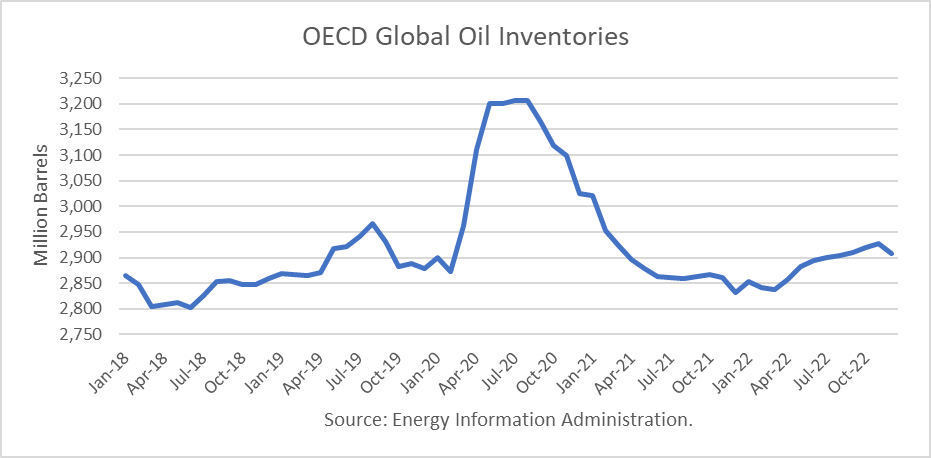
The Energy Information Administration released its Short-Term Energy Outlook for July, and it shows that OECD oil inventories likely peaked at 3.207 billion in July 2020. In June 2021, it estimated stocks fell by 12 million barrels to end at 2.864 billion, 337 million barrels lower than a year ago.

The EIA estimated global oil production at 96.75 million barrels per day (mmbd) for June, compared to global oil consumption of 97.90 mmbd. That implies an undersupply of 1.15 mmb/d, or 34 million barrels for the month. Given the decrease in OECD stocks, non-OECD stocks are implied to have increased by 20 million barrels.

For 2021, OECD inventories are now projected to draw by net 194 million barrels to 2.832 billion. For 2022 it forecasts that stocks will build by 76 million barrels to end the year at 2.908 billion.

OECD Global Oil Inventories

The EIA forecast does not incorporate the OPEC+ plan to increase production by 400,000 b/d each month from August to December. The plan was not formally put into place because of an objection by the UAE to obtain a higher quota. All OPEC decisions must be unanimous. However, UAE's energy ministry said on July 14th that there had been significant progress in resolving its standoff with OPEC+ and that a compromise deal is being discussed that will raise the UAE's crude production quota to 3.65 million bpd from about 3.17 mmbd currently.

The current “reference production” and adjustments levels are detailed in the table below. Continue reading "World Oil Supply And Price Outlook, July 2021"