S&P 500 Futures Show A Flat Market

S&P 500 Futures

The S&P 500 futures in the June contract settled last Friday in Chicago at 2829 while currently trading at 2822, basically unchanged for the trading week. However, that is not telling you the whole story as the volatility remains exceptionally high as the Dow Jones is down over 600 points ending the week at a very sour note.

I am not involved as the volatility, and the risk/reward is not in your favor to take a bullish or bearish position. However, I do think the stock market will head higher due to all the stimulus programs. I still see light at the end of the tunnel because many states have started to open up their economies, which is a great thing to see, in my opinion. However, if you are long a futures contract, I would place the stop loss under the 10-day low standing at 2717 as an exit strategy.

There is so much uncertainty at the current time. Until the Coronavirus situation is figured out, you're going to continue to see this market flip flop daily. I am an optimist, and I think that the United States economy will come back strong in the coming weeks. I would take advantage of price weakness to enter into a bullish position. I think many individual stocks are incredibly cheap and should be looked into substantially.

TREND: MIXED
CHART STRUCTURE: IMPROVING
VOLATILITY: HIGH

Mexican Peso Futures

The Mexican Peso in the June contract settled last Friday at 3959 while currently trading at 4035 up about 75 points for the trading week still stuck in a 6-week tight consolidation as prices look to have bottomed out in my opinion as prices have absolutely collapsed over the last couple of months due to the Coronavirus situation. Continue reading "S&P 500 Futures Show A Flat Market"
COVID-19 - An Agile Options Strategy

COVID-19 has become the black swan event that has materialized into a worldwide economic halt. The spread of the virus globally has crushed stocks and decimated entire industries such as airlines, casinos, travel, leisure, and retail, with others in the crosshairs. COVID-19 was the linchpin for the major indices to drop over 30% over the course of 22 days. This COVID-19 induced sell-off has been the worst since the Great Depression in terms of breadth and velocity of the sell-off while inducing extreme market volatility that hasn’t been since the Financial Crisis.

Although options trading provides a margin of downside protection and a statistical edge, no portfolio is immune from the wreckage when hit with a black swan event. Thus, proper portfolio construction is essential when engaging in options trading to drive portfolio results. One of the main pillars when building an options-based portfolio is maintaining ample liquidity via holding ~50% of one’s portfolio in cash. This liquidity position provides the ability to adjust when faced with extreme market conditions such as COVID-19 rapidly. Thus, an agile options-based portfolio is essential. The COVID-19 pandemic is a prime example of why maintaining liquidity is one of the many keys to an effective long-term options strategy.

An Agile Options Strategy

Risk management is paramount when engaging in options trading. A slew of protective measures should be deployed if options are used as a means to drive portfolio results. When selling options and running an options-based portfolio, the following guidelines are essential: Continue reading "COVID-19 - An Agile Options Strategy"

Flattening The Curve

While the stock market is coming off one of it's best months in over 30 years, I can't get the idea of the "flattening the curve" out of mind. Yes, the S&P 500 gained +12.7% for April, its third-biggest monthly gain since World War II. The Dow gained +11.1%, its fourth-largest post-war monthly rally, and its best month in 33 years. Not to be outdone, the NASDAQ outpaced both the DOW and S&P 500 by posting a monthly gain of +15.5% for April, that's its biggest one-month gain since June 2000.

All of that sounds great, right? But even with these big monthly gains, we are still roughly -16% off the record high for the S&P 500, and if you take a look at the weekly charts, you'll see that the stock market is flattening the curve.

On a weekly level, all three indexes will post weekly losses, for the second week in a row. Talk about stumbling across the finish line. Clearly, all the gains were made in the early part of April before the earnings season ramped up. Continue reading "Flattening The Curve"

Is Real Estate The Next Shoe To Drop - Part 3

Our continued research into the state and status of the Real Estate market continues to point to a process that is starting to unfold in the US which may put price and activity levels at risk. Within the past two segments of this research article, we’ve highlighted how market cycles and recent market data point to a Real Estate market that may be in the early stages of a downward price cycle.

Additionally, within Part II of this article, we highlighted the human psychological process of dealing with a crisis event which also suggests a deepening price contraction event may take place within the next 12 to 24+ months.

US New Home Sales Data Was Just Released

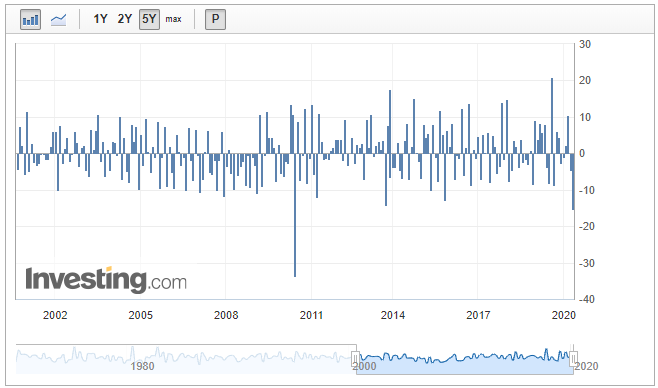
We believe the psychological process is just starting to become evident in the current data. For example, the US New Home Sales data was just released and it shows the sharpest decline in activity since June 2010 (nearly 14 months after the actual bottom in the US stock market in March 2009).

Real Estate

Our researcher team believes investors/traders and many consumers have become complacent with the current data and are simply in denial in attempting to relate future economic outcomes to the current set of circumstances. There has never been anything like this to disrupt global economic activity and consumer engagement over the past 100+ years. Not even the Great Depression or WWII was on this scale. Continue reading "Is Real Estate The Next Shoe To Drop - Part 3"

Is Real Estate The Next Shoe To Drop - Part 2

As we continue to delve into the looming Real Estate crisis that will likely hit the US and globe over the next 12 to 24+ months, we want to focus on the human psychological process of dealing with a crisis event and how that relates to economic engagement. In the first part of this research article, we discussed how the time-line and events that have unfolded over the past 120+ days have setup a continuing global crisis event. The best of our knowledge, there has been nothing like this, other than massive wars like WWII, that have taken place on the planet over the past 75+ years.

This presents a very real possibility that human psychological processes have engaged throughout the planet that may disrupt how effective the recovery efforts are in the near future. If humans engage in a traditional psychological crisis-cycle process, then there is little chance that the economic recovery will reach 2018-2019 levels very quickly. Let’s review the psychological process of a crisis event.

The Normal Psychological Reactions To A Crisis Event Are

Vicarious Rehearsal: People that are distanced from the crisis event (location or expectations) tend to react in a way that reflects their belief that “it won’t result in any dramatic changes to their lives”. Thus, they continue behaving and acting as they would without the crisis.

Denial: The process of denial takes on many forms. Some people simply ignore the warnings or information related to the crisis. Others become agitated or confused. Some simply chose to believe the threat is not real and others may believe the threat does not relate to themselves.

Stigmatization: Sometimes, segments of society may become stigmatized by their community as anger or blame drives people to believe infected people or segments of society that may promote the crisis event are identified. We’ve already seen some of this type of activity throughout the globe take place. Continue reading "Is Real Estate The Next Shoe To Drop - Part 2"