Can A Covered Call Strategy On Netflix Bode Well For You Too?

Introduction

Netflix Inc. (NASDAQ:NFLX) is a very controversial high-flying growth stock with a nosebleed valuation as measured by traditional metrics such as the price-to-earnings multiple (P/E ratio) and the PEG ratio. Due to its rapid growth, expanding original programming, wrestling market share away from big cable companies, expansion into international markets and its overall ubiquity, it's easy to see why investors are willing to pay a premium. It's difficult to arrive at an accurate valuation based on traditional metrics for this media disruptor. Due to these factors and the difficulty of placing an accurate valuation on Netflix, options in the form of covered call writing may be an effective way to leverage this high-flier while mitigating downside risk. Netflix offers a confluence of volatility, liquidity and a high level of interest which gives rise to high yielding premiums on a bi-weekly or monthly basis. This confluence bodes well for those who are long Netflix and desire to leverage options trading to augment returns and mitigate risk throughout the volatile nature of Netflix’s stock. Netflix’s recent earnings disappointment underscores the value of covered call writing to mitigate losses and smooth out drastic moves in the underlying security.

Note: This article is backing my long position while opportunistically and quantitatively writing covered calls to mitigate downside risk and generate income. I provide my real life examples embedded into my long position as Netflix is intrinsically volatile.

Leveraging The Volatility In Netflix

Netflix is a highly volatile stock and swings of $10 per share (or ~8%) throughout the course of a day are all too often observed. These swings to the upside or downside can be difficult to stomach. However, one can leverage his position via writing covered call contracts to mitigate these swings while remaining long this volatile stock. Utilizing biweekly or monthly contacts one can expect to obtain a cash premium of roughly 3%-6% with a strike price that's within 3%-5% of the strike price (tables 1 and 2). Continue reading "Can A Covered Call Strategy On Netflix Bode Well For You Too?"

Too Late To Short The Dollar?

Lior Alkalay - INO.com Contributor - Forex


The US consumer is under pressure. Consumer Confidence level fell to 89 in April, and retail sales fell by -0.3 MoM in March. And as if that weren’t enough, GDP growth missed the mark for a second consecutive quarter, with Q1 growth falling to as low as 0.5% annualized, well below expectations.

Naturally, those developments are not bringing a Fed rate hike any closer, and it leaves the Dollar widely exposed to short selling. It’s the catch-up game, where Dollar peers such as the Euro, Yen, and Aussie are gaining lost ground. The relative advantage of the US economy is narrowing, and the prospect of a tightening cycle from the Fed seems even more remote.

This isn’t the first time the Dollar has been hit by the catch-up game. Here’s how the game plays out: The Dollar turns weaker, shaving its value by several percentage points only to come back stronger in the end as the US economy regains momentum. That’s why one should tread lightly before pouncing on a Dollar short. After a series of disappointments, the chances of an upward surprise in US data is much greater. There’s a very real chance that shorting the Dollar at this stage, after a 6.5% correction, will be too late. Continue reading "Too Late To Short The Dollar?"

LATAM: Watch Brazil But Buy The Peso

Lior Alkalay - INO.com Contributor - Forex


LATAM currencies are back in the game. Optimism over Brazil’s political future is growing and commodities, a key driver of regional growth, are recovering. Together, much of the uncertainty looming over the region has been removed and put regional currencies -the Brazilian Real, Mexican Peso and Chilean Peso into favor.

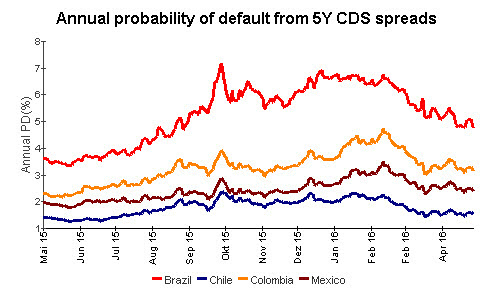
One important gauge of rising optimism is the price of Credit Default Swaps. Credit Default Swaps, or CDS for short, measure the cost of insuring against a bankruptcy. When the price of Credit Default Swaps falls, it points on lower risk and higher optimism. As the chart below indicates, Credit Default Swaps have fallen dramatically across the region since February, signaling a surge in optimism in the LATAM space.

LATAM CDS Chart
Chart courtesy of Deutsche Bank

But the CDS chart illustrates another very interesting picture. While the fall in risk is across the board, Brazil, the largest economy in the region, is deemed as the most probable to default on its debt by a wide margin compared to much smaller regional peers. Continue reading "LATAM: Watch Brazil But Buy The Peso"

The Japanese Gold Trapped In A Large Consolidation

Aibek Burabayev - INO.com Contributor - Metals


This topic was promised in one of my previous posts to our readers, and I am pleased to offer it to you today. I was waiting to see the end of the month price action to try to write when I considered all the moves within a month for more accuracy. Carol and Diane, I should admit you are very brave ladies as when I opened GYEN (The AdvisorShares Gartman Gold/Yen ETF (NYSE Arca: GYEN)) chart I was shocked by all the crazy and abrupt moves there. The history of this ETF is quite short (from 2014), and the analysis based on it would not be solid. At the end of the post, I've added the GYEN chart for you to judge for yourself. I picked the gold/JPY chart instead for analysis as the ETF tracks the price of this pair. I hope you will enjoy the post.

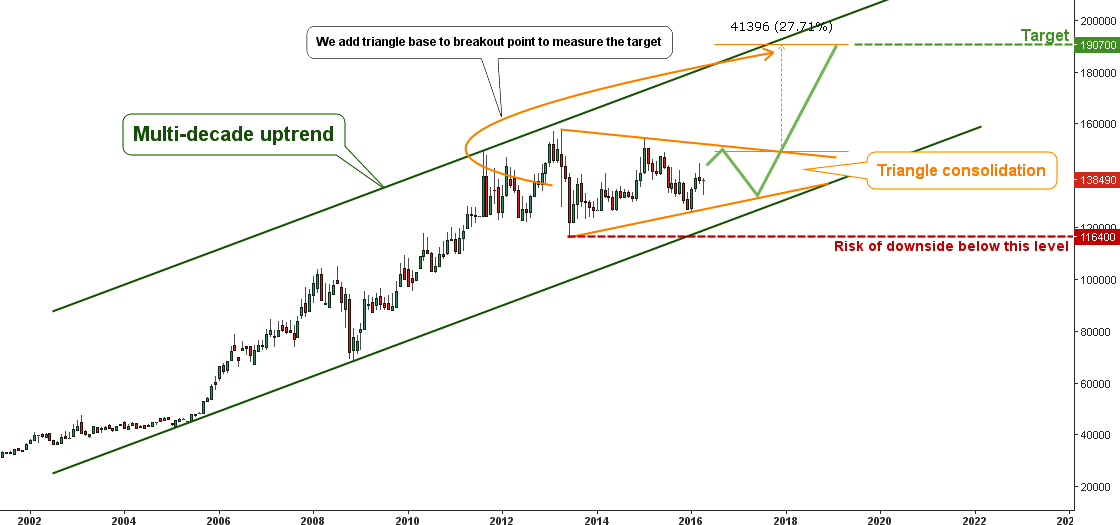
Chart 1. Gold/JPY Monthly: Multi-Decade Uptrend Is Intact

Monthly Chart of GLD/JPY
Chart courtesy of tradingview.com

The multi-decade uptrend highlighted in the chart reflects the trends of both the gold/$ and $/JPY markets. Those markets were extremely bullish for the past decade, and the gold/JPY strong upside move shows the synergy of them. The Big Bull Run here stalled in 2013 while gold/$ stalled two years earlier in 2011. The reason is that the $/JPY bullish move stopped last year and helped to extend the upside move in gold/JPY and then to soften the downside pressure from the falling gold/$. Continue reading "The Japanese Gold Trapped In A Large Consolidation"

This Stock Could Feed Profits Into Your Portfolio

Daniel Cross - INO.com Contributor - Equities


Long-term value investors understand that truly profitable trends can take time to build up. Stock market sectors wax and wane with the economy and flow along the curvature of the business cycle, but others don't necessarily obey the same rules.

There's an old saying by Mark Twain, “buy land – it's the one thing they’re not making any more of.” Value investors can take it one step further, though. Arable land is limited, and the global population is growing. That makes food production a critical industry that will continue to be relevant regardless of economic direction.

Low oil prices translate into higher consumer spending which benefits food production companies as well. As a defensive non-cyclical industry, demand stays relatively constant regardless of how the economy is performing.

A rising tide lifts all boats, and the food industry is getting quite a lift lately. Several companies have raised guidance for the next quarter, and a number of analysts have upgraded the industry's outlook going forward. Continue reading "This Stock Could Feed Profits Into Your Portfolio"