Fed Has Plenty of Excuses Not To Do Anything Soon

George Yacik - INO.com Contributor - Fed & Interest Rates


If you're among the vanishing minority of people who still think the Federal Reserve is going to start raising interest rates in June, the latest reports on the U.S. economy and events in Europe and China should disabuse you of that farfetched notion.

The proportion of economists predicting the Fed will wait until September to raise rates rose to 70% in an April 3-9 survey, more than double the figure from the previous month. That ratio has likely gotten even wider following the news of the past week, although I think it will be well after September before the Fed starts "normalizing" monetary policy.

Let's look at the U.S. economy first, where indicators continue to come in soft. Continue reading "Fed Has Plenty of Excuses Not To Do Anything Soon"

Gold and Silver: Catch The Wave Up

Aibek Burabayev - INO.com Contributor - Metals


Gold

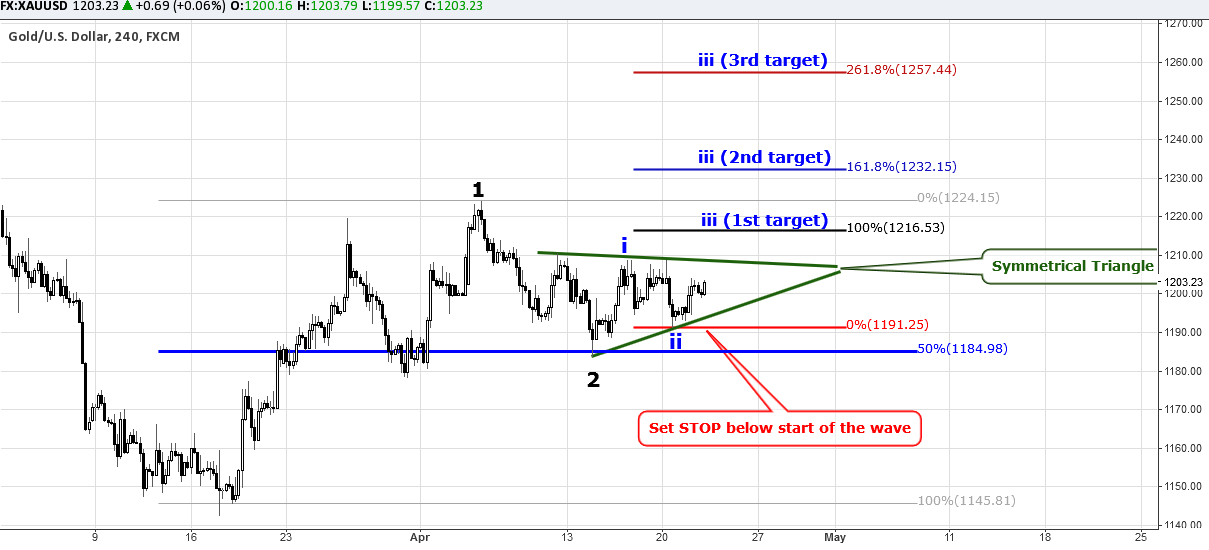
4H Gold Chart
Chart courtesy of Tradingview.com

Last week, the Gold short trade was stopped above $1200. Price immediately broke back above the head and shoulders neckline beyond $1200 and that was it. Stops are a good risk management instrument, they should be set at once and should be tight to protect your capital.

Today I prepared for you a totally new idea with a fresh look. I combined a classic trend model with the Elliott Wave technique and it is shown according to the long-term model posted at the start of this month.

Gold charted a good upside impulse wave 1 (of A) from the March low at $1142 up to the intermediate high at $1224. Then a correction wave 2 emerged and price retraced down to the 50% Fibonacci area at $1184. Usually, the 2nd wave corrects down to 61.8%-99% of the 1st wave, but this time we have had only half of it which means that the market accumulated enough bullish momentum to continue higher. Continue reading "Gold and Silver: Catch The Wave Up"

The Brazilian Real: From Bad To Ugly

Lior Alkalay - INO.com Contributor - Forex


Over the past two years, it seems, Brazil has remained in the headlines for the very worst of reasons – corruption. In fact, the very latest scandal at Petrobras, the state owned petroleum giant, reached all the way to its upper echelon. Long gone are the days when the Brazilian government was praised for its fiscal discipline; the situation there has become so notorious that the name Brazil, it seems, has become synonymous with corruption. And as if this were not bad enough the country's main exports, which range from iron ore to agricultural goods, have tumbled in crisis. Yet, as investors, we always seem to intuitively look at the bright side of even the worst situation; in this case, we have thoughts of buying because when the situation is as bad as it is, we think, from here on out, that the situation can only get better. The Brazilian economy is basically at a standstill with a weak government at the helm, and there is one corruption scandal seemingly after another, and given the softness in commodities' prices the question that investors want an answer to is this: is the collapse in the Brazilian Real over?

A Broken Banking System

While many see corruption as the core problem in Brazil, this writer thinks the true core and the basis of the problem is, in fact, rooted in the country's banking system and at its heart, with Brazil's central bank, the Banco Central do Brasil. While reforms in the country are key for future growth it is the credibility of its central bank that is key for the Real, and as the chart below reveals, credibility is sorely lacking.
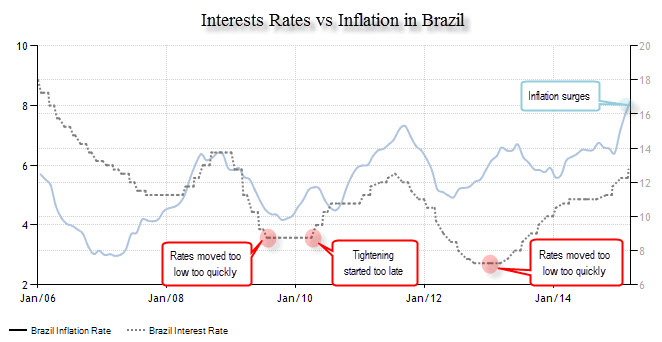

Chart courtesy of Tradingeconomics.com

The central bank has marked the 4.5% as the desired target for inflation. Yet the Brazilian central bank, generally amid political pressure to spur growth, has always eased policy prematurely and too aggressively. However, when it comes to tightening, the fact is the central bank doesn't apply those same standards. When in 2009 inflation peaked, rates were cut quickly, to as low as 8.75%, and left unchanged for several months. Soon after, though, inflation spiraled out of control once again, above 7%. And yet again, the Brazilian central bank was behind the curve, tightening too slowly and allowing inflation to move outside its targeted range. Once inflation slowed to 4.91% the central bank once again cut rates, this time even more aggressively than before, and the results were not pretty. As seen in the chart, inflation was soon out of control, to the extent that the latest reading on inflation hit 8.13%, once again spurred on by a central bank that hands out rate cuts much too easily. Continue reading "The Brazilian Real: From Bad To Ugly"

What’s the Best ETF for Playing an Oil Price Rebound?

Adam Feik - INO.com Contributor - Energies


A lot of investors seem very interested in bottom-fishing in the oil and energy realm these days. Perhaps that fact by itself ought to give everyone a little pause. It certainly does me!

The attraction, of course, is that oil's big crash from its June 2014 peak has made for a lot of "lower prices." Obviously, we all like to "buy low," when possible. Plus, almost everyone agrees oil isn't going away anytime soon. I don't dispute any of that.

On the contrary, as I've cited before (see my January 22nd blog, for example), the oil industry must find a bunch of new oil each year – about 5% of its current productive reserves – just to keep up with demand. About 4% of the 5% increase is required merely to replace depletion. The other 1% is to meet demand growth. Another way of stating the same thing is that by 2020, the industry will need to find about 30 million bbl/day of new oil supplies (compared to today's production of about 93 million barrels per day).

Furthermore, to reiterate a few more key points from that Jan. 21st blog, emerging countries are poised to continue increasing their demand for oil and energy as they expand the world's "2nd great industrial revolution." This is not a small deal or a short-term flash in the pan, as emerging countries are home to about 6 billion of the world's 7 billion people. In addition, the world's population is set to increase by 2 billion by 2040, and much of the increase will occur in emerging countries. Continue reading "What’s the Best ETF for Playing an Oil Price Rebound?"

Don't Underestimate This Oil and Gas Driller

Daniel Cross - INO.com Contributor - Equities


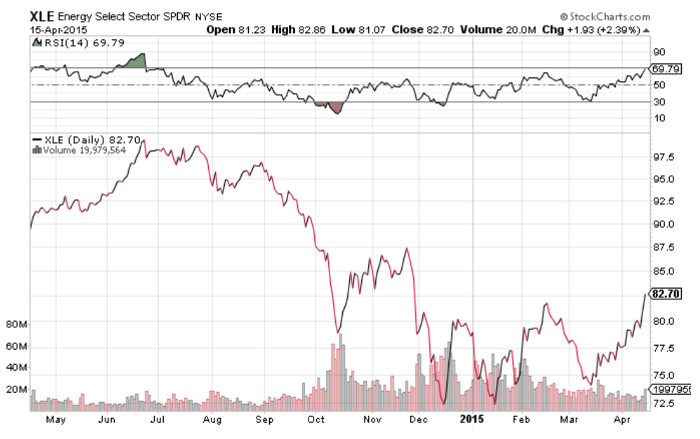
Oil's free-fall hasn't been kind to offshore or onshore drillers. A quick look at the Energy Select Sector SPDR (XLE) is evidence of weakness in the industry.


Chart courtesy of StockCharts.com

Since the summer of last year, oil has fallen from over $100 per barrel down to to less than $45 per barrel. For the past few weeks though, oil has been on an uptrend. It now stands at around $56 per barrel and investors are clamoring to get back into the very stocks that were sold off over the past several months. Continue reading "Don't Underestimate This Oil and Gas Driller"