Bitcoin Still Shines Like A Sun

In this post, I would like to show you what happens to the structure of the crypto market over time as new stars join the universe with hopes of taking down the shining star, Bitcoin.

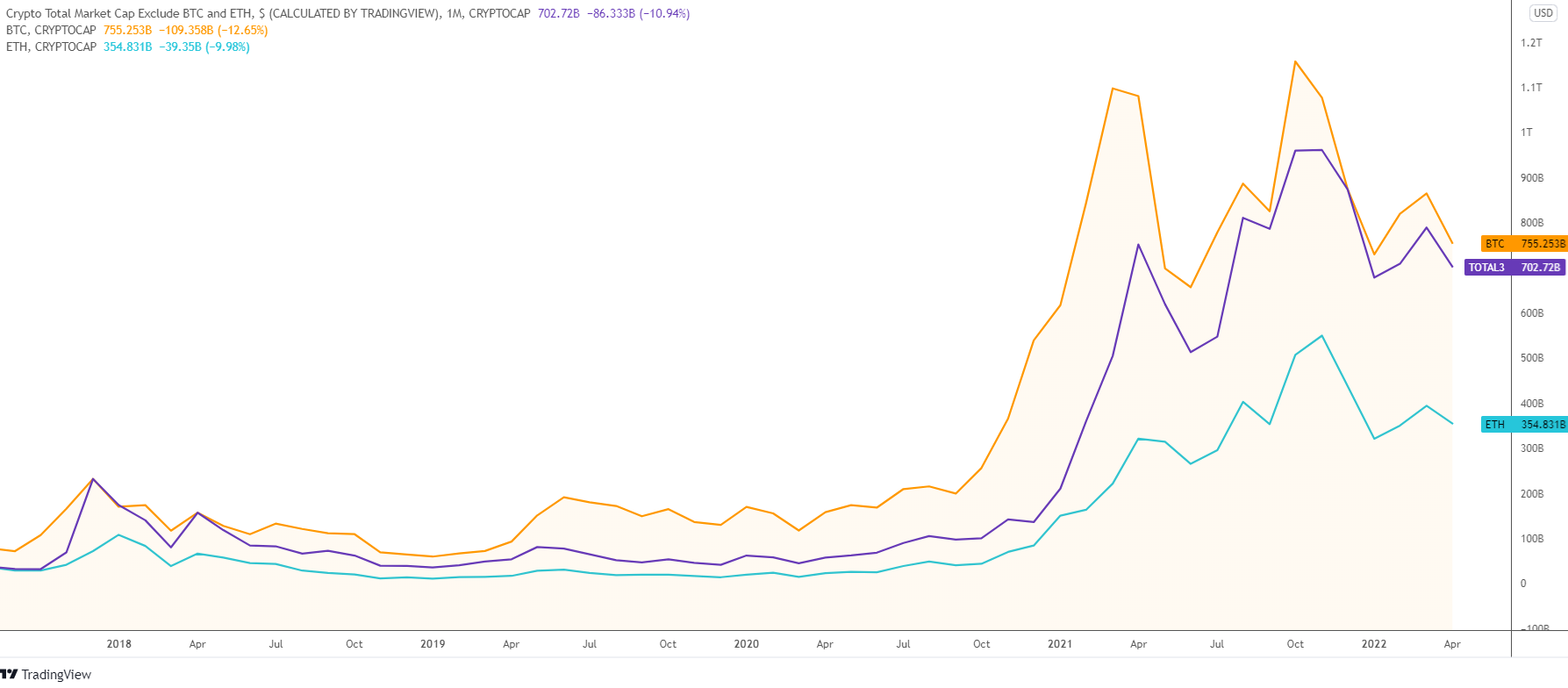
Chart 1. Market Cap Comparison: Bitcoin, Ethereum, and Altcoins
Bitcoin vs. Ethereum

The chart above starts in September of 2017. Both altcoins and Ethereum had a market cap of around $30 billion, while the main coin had more than double that at $72 billion. The latter started to rally at once, reaching the top of $231 billion by the end of 2017. Altcoins followed Bitcoin with a delay of one month; however, the growth was more robust and the market cap caught up with that of the main coin rising more than seven-fold. It was that very rare moment when the market cap of altcoins could touch the “Sun” of Bitcoin in the considered period. Continue reading "Bitcoin Still Shines Like A Sun"
Navigating Volatility - Risk-Controlled Portfolio

Controlling portfolio beta, which measures overall systemic risk of a portfolio compared to the market, on the whole, is essential as these markets continue to display bouts of extreme volatility. Containing volatility while generating superior returns relative to the market is the goal with an options-based portfolio. Mitigating risk within a portfolio can be achieved via a blended options-based approach where cash is held in conjunction with stock positions and an options component. Options alone cannot be the sole driver of portfolio appreciation; however, options can play a critical component in the overall portfolio construction to control risk and volatility.

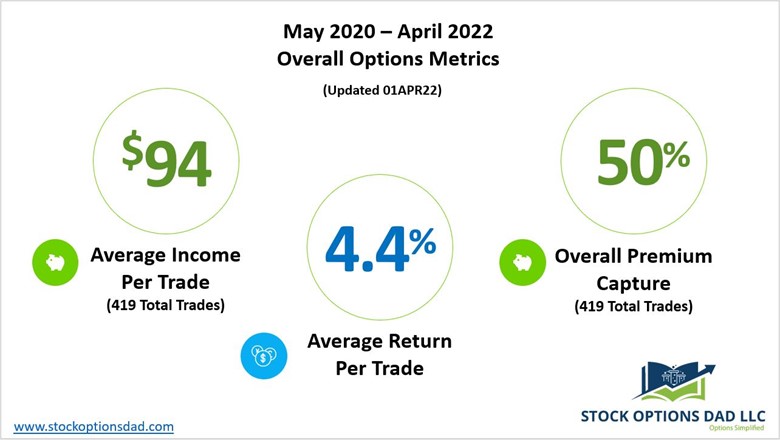
Generating consistent monthly income while defining risk, leveraging a minimal amount of capital, and maximizing returns is the core of the options-based portfolio strategy. Options can enable smooth and consistent portfolio appreciation without guessing which way the market will move. Options allow one to generate consistent monthly income in a high probability manner in various market scenarios. Over the past 24 months (April 2020 – March 2022), 419 trades were placed and closed. An options win rate of 97% was achieved with an average ROI per trade of 4.4% and an overall option premium capture of 50% while outperforming the Dow Jones throughout these two years. The performance of an options-based portfolio demonstrates the durability and resiliency of options trading to drive portfolio results with substantially less risk. The options-based approach attempts to circumvent market drawdowns and generated a return of 62.2% relative to the Dow Jones’ 58.2% (Figures 1, 2, and 3).

Controlling Volatility
Figure 1 – Overall option metrics from May 2020 to March 2022 available via a Trade notification service
Continue reading "Navigating Volatility - Risk-Controlled Portfolio"

Here's How to Handle Inflation

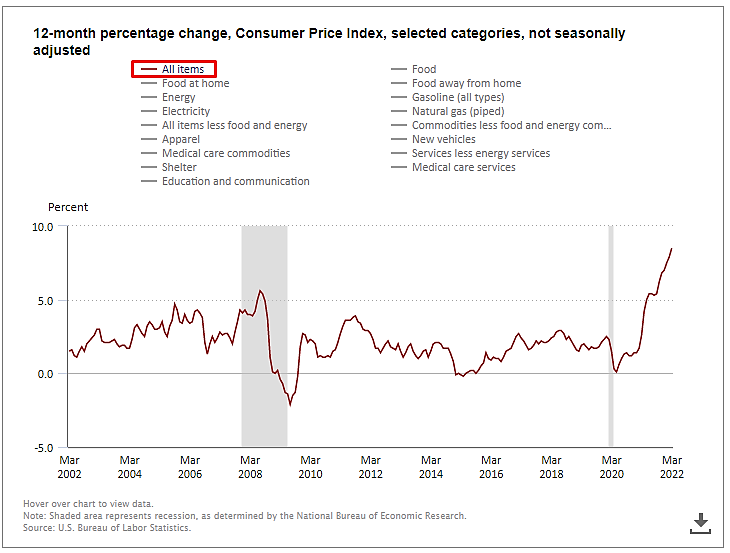
I have to admit I almost fell out of my chair when I dug deep into the latest inflation numbers. Compared to a year ago, prices are up a jaw-dropping 8.5%. And in March alone they grew 1.2%. That’s the biggest single-month increase in the last 6 months. And if you look at the trend since the last year, those monthly increases are getting bigger, not smaller.

But that’s not all. If you take a stroll down the different components of the price increases, there’s pretty much nowhere to hide. Compared to a year ago, food is up 9%, used cars and trucks are up 35%, gas is up 48%, and fuel is oil up a mind-numbing 70%. Here are the grisly details in chart form:

Inflation

Source

As you can see from this chart, top-line inflation is at multi-year highs. In fact, the 8.5% year-ago increase in March is the biggest 12-month increase since December 1981.

Now, take a look at the same chart, but the more volatile food and energy components stripped out: Continue reading "Here's How to Handle Inflation"

Gold Declines As Fed Prepares To Fight Inflation

The Federal Reserve’s next FOMC meeting is just under two weeks away, and market participants are gaining insight from Chairman Powell and other Federal Reserve voting members. Recent statements by Chairman Powell have indicated a major shift in his position regarding inflation. Up until his most recent statements, he maintained that inflation levels had peaked, were transitory, and would begin to decline. However, he has been forced to reevaluate those assumptions based on the reality that the CPI is currently at 8.5% for March, and the PCE index came in at 6.4% in February. PCE numbers for March will be released on April 29.

Statements by all members of the Federal Reserve have intrinsically contained subtle changes in words used to describe their forward guidance; this was not the case this week when Chairman Powell addressed the issue of inflation head-on.

For the first time, Powell was forced to acknowledge that “it is appropriate to be moving a little more quickly... Our goal is to use our tools to get demand and supply back in synch…and do so without a slowdown that amounts to a recession... It is going to be very challenging.”

During the March FOMC meeting, the Federal Reserve began its process of interest rate normalization or “lift-off” by raising the Fed Funds rate from virtually zero (0% to .25%) by .25% taking interest rates to 25 – 50 basis points.

The most recent inflationary data indicates that Americans are experiencing the highest inflationary pressure since January 1982, which makes it almost certain Continue reading "Gold Declines As Fed Prepares To Fight Inflation"

Truth Is, It's Not Just About Fueling EVs

“The following is an excerpt from Tim Snyder’s “Weekly Quick Facts” newsletter. Tim is an accomplished economist with a deep understanding of applied economics in energy. We encourage you to visit Matador Economics and learn more about Tim. While there, you can sign up for his completely free Daily Energy Briefs and Weekly Quick Facts newsletters.”

Truth, once again leads our headlines? Over the last two weeks, I have been busting my hump to prepare a presentation for an energy group, having a conference and I really dug deep to pull the data that really made sense for those who don’t ever see all the facts.

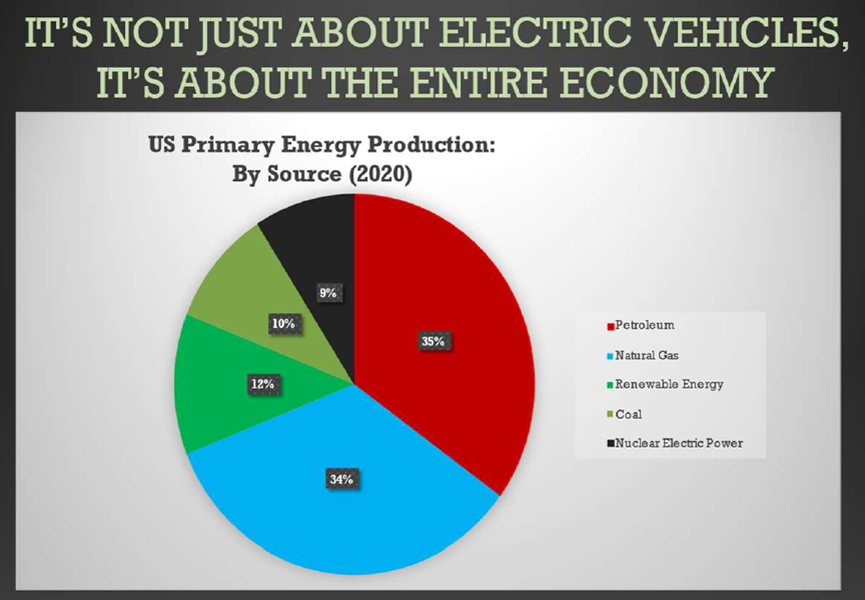
I went to 25 or 30 different sources and grabbed “Snippets” of data to use in my presentation and a solid theme began to develop. The theme was this, it’s not just about the EVs, it’s about the entire energy balance and how many BTUs it would take, to replace fossil fuels in the entire US economy. Here’s how much we produce by sector, each year.

Demand in Quads, by Sector. Continue reading "Truth Is, It's Not Just About Fueling EVs"