Stocks Positive For Month Despite Weakness

Hello traders everywhere. Although the stock market has slipped into the negative territory on the day all three indexes are looking to post a monthly gain for April. This will mark the first positive monthly gain in two months as volatility has taken a toll on the market over the last three months.

The S&P 500 is posting a monthly gain of +.75%; the DOW is looking to add slightly more to the bottom line with an increase of +.80%, in fact, the DOW hasn't had a losing April since April of 2005. The NASDAQ is posting the lowest monthly gain of +.18 as the tech sector has been under been under extreme pressure and volatility and with Apple (AAPL) earnings right around the corner it could get worse. All indications are that iPhone sells, although positive, are going to miss the mark as far as many analysts are concerned.
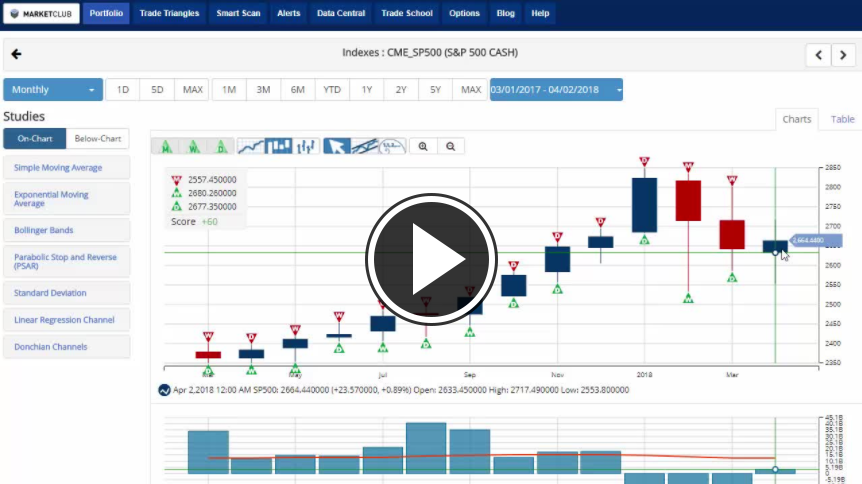
Stocks Positive For Month

The U.S. dollar continues to make a comeback with a monthly gain of +1.98%. After posting a weekly loss last week, Crude oil is closing out the month on a strong note and posting a +6% gain on the month. Meanwhile gold is looking so brilliant as it posts a loss of -.69% on the month.

Bitcoin continues to make a comeback, and it is going to have an impressive monthly gain of +31% for April. If you can ride the wave, it certainly can pay dividends. Continue reading "Stocks Positive For Month Despite Weakness"

Weekly Futures Recap With Mike Seery

We've asked Michael Seery of SEERYFUTURES.COM to give our INO readers a weekly recap of the Futures market. He has been Senior Analyst for close to 15 years and has extensive knowledge of all of the commodity and option markets.

Michael frequently appears on multiple business networks including Bloomberg news, Fox Business, CNBC Worldwide, CNN Business, and Bloomberg TV. He is also a guest on First Business, which is a national and internationally syndicated business show.

Silver Futures

Silver futures in the May contract settled last Friday in New York at 17.16 an ounce while currently trading at 16.45 hitting a two week low finishing down about $0.70 for the trading week all due to the fact that the U.S. dollar hit a four-month high today putting pressure on the whole precious metal sector. I had been recommending a bullish position from the 16.85 level getting stopped out in yesterday's trade. That was disappointing as I truly thought silver prices had broken out, but the strength in the dollar really put the kibosh on this trade so I will sit on the sidelines and wait for another trend to develop. Silver prices are now trading below their 20 and 100-day average as the short-term trend is lower, however, it really is mixed as we continue to trade between 16/17 over the last several months as the volatility has picked up which is a good thing to see. I will not give up on this commodity as I still think we will be trading in the $20 range come year end, but at the current time, we are range bound. Presently I do not have any trade recommendations in the precious metals as they all remain on the defensive as they will bottom out soon in my opinion. Look at other markets that are beginning to trend as I hate to trade choppy markets as they are very difficult to trade successfully.
TREND: MIXED
CHART STRUCTURE: POOR
VOLATILITY: INCREASING

Continue reading "Weekly Futures Recap With Mike Seery"

CVS: Amazon Capitulates - Too Cheap To Ignore?

Noah Kiedrowski - INO.com Contributor - Biotech - CVS


Introduction

CVS Health Corporation (NYSE:CVS) recently touched down to a 52-week low of ~$60 per share which is a drastic decline from its all-time high of $112 in 2015 translating into a nearly 50% slide in its shape price. Its P/E ratio is in sub-10 territory against an S&P 500 average of 24, suggesting CVS is roughly 60% cheaper than the average stock. Its decline has unfolded in the face several headwinds that have negatively impacted its growth, and the changing marketplace conditions have plagued the stock. Starting in the latter half of 2015 and still unfortunately persisting, the political backdrop was a significant headwind for the entire pharmaceutical supply chain from drug manufacturers to pharmacies/pharmacy benefit managers (i.e. CVS and Walgreens (WBA)) and the drug wholesalers in-between (i.e. McKesson (MCK), Cardinal Health (CAH) and AmerisourceBergen (ABC)). As an extension of the political climate, the drug pricing debate has not subsided and continues to be a hot-button issue weighing on the overarching sector. In an effort to address these headwinds and restore growth CVS has made a bold $69 billion acquisition of Aetna (AET) to form a colossus bumper-to-bumper healthcare company. This new CVS will combine its existing pharmacy benefits manager (PBM) and retail pharmacies with the second largest diversified healthcare company. This is a bold and hefty price tag to pay yet may be necessary to compete in the increasingly competitive healthcare space in the face of drug pricing pressures. CVS is making a defensive yet essential acquisition moving into the future. As CVS transitions and realigns its business to adapt to the changing healthcare space along with Amazon’s (AMZN) competitive threat diminishing, I feel the stock is too cheap to ignore at these levels. Initiating a position near ~$60-$65 may be a substantial long-term investment for long-term value and appreciation.

Amazon’s Healthcare Capitulation

Amazon has officially entered the retail space via the Whole Foods acquisition. It had been rumored for months that Amazon was gearing up to gain entry in the potentially lucrative $560 billion prescription drug space by leveraging the Whole Foods storefronts. The speculation was rooted in Amazon’s ramped up hiring and talent acquisition to build an internal pharmacy benefits manager for its own employees. This internal effort was viewed as a proof-of-concept for the broader drug supply chain effort. Amazon has a health team that’s focused on both hardware and software projects, like developing health applications for the Echo and Dash Wand. Its cloud service, Amazon Web Services, continues to dominate the health, life sciences, and technology market as well. Amazon still has the potential with its technology and reach to disrupt the current marketplace however as of now Amazon has decided to not pursue this business in the near future. Continue reading "CVS: Amazon Capitulates - Too Cheap To Ignore?"

Stock Market Waivers As GDP Growth Slows

Hello traders everywhere. The U.S. economy posted a 2.3% annual growth rate in the first quarter of 2018 as consumer spending turned in the weakest performance in nearly five years. However, the January-March increase came in better than expected, supporting hopes for a solid rebound for the rest of the year where analysts are looking for growth to surpass 3% once again.

The Commerce Department reported Friday that the gain in the gross domestic product (GDP), the economy's total output of goods and services, followed a 2.9% rise in the fourth quarter of 2017 and gains above 3% in the previous two quarters.

GDP Growth Slows

The DOW and NASDAQ are on pace to post a loss for the week overall after having two weeks of weekly gains, while the S&P 500 is sitting relatively unchanged for the week, although it is desperately close to posting a weekly loss as well.

The U.S. dollar is ending a strong week with a gain of 1.4% adding to the gains that it saw last week and looking to break 92.02 which would give us a new green monthly Trade Triangle indicating that the long-term trend is up for the dollar. Earlier in the week, Treasury yields broke above 3% on the week for the first time since 2014. But have since fallen on weak consumer spending data. Continue reading "Stock Market Waivers As GDP Growth Slows"

2018 U.S. Gasoline Season Outlook

Robert Boslego - INO.com Contributor - Energies - U.S. Gasoline


OPEC’s Monthly Oil Market Report (MOMR) for April featured an article on the summer petroleum products market. It observed that the U.S. is typically the key driver for products markets in the run-up to the summer driving season, and indicators are pointing to a positive and optimistic outlook.

It cites year-over-year January combined gasoline and diesel growth of 845,000 b/d. It states that the weekly data in February and March further supported this positive trend. And it concludes U.S. gasoline and distillates demand will grow by around a combined 992,000 b/d in 2018.

But a closer examination of gasoline demand and consumption estimates provide a different picture. Also, the MOMR totally ignored the supply side of the market, and last summer’s Hurricane Harvey and Mexico’s refinery problems contributed to support that is unlikely to be repeated this summer. Continue reading "2018 U.S. Gasoline Season Outlook"