Is Janet Coming Back?

George Yacik - INO.com Contributor - Fed & Interest Rates


A lot of names have been thrown around to be the next head of the Federal Reserve. But who is the most likely person President Trump will name?

The current occupant, Janet Yellen, has to be considered the front-runner, although that doesn’t necessarily mean she’ll be renominated. Indeed, I would put the odds of her being reappointed at less than 50-50 – a lot less.

She does have several things going for her. First and foremost, she’s a known quantity. The markets would certainly be happy if Yellen were reappointed, if for no other reason than that they’ll know what they’re getting. With the major stock indexes all at or near all-time highs, and the bull market already nine years old, the market doesn’t want anything untoward to upset the status quo.

But as we should know well by now, stability isn’t exactly Trump’s comfort zone. Two weeks ago, he had no problem telling investors in billions of Puerto Rican bonds that they could pound sand, which caused a major meltdown in the price of those bonds (administration officials subsequently walked back his remarks).

Would he risk something like that happening to the entire bond and stock markets by not reappointing Yellen? (Even if she doesn’t get reappointed as Fed chair, Yellen’s term as a member of the Fed’s Board of Governors doesn’t end until January 2024, although it’s expected that she’ll resign if she’s not renamed as chair).

Besides the stability factor, the main reason why the markets like Yellen, of course, is because, in the words of Mr. Trump himself on the campaign trail in May 2016, “She is a low-interest rate person, she’s always been a low-interest rate person, and let’s be honest, I’m a low-interest rate person.” He reiterated those feelings in July in an interview with the Wall Street Journal, in which he added, “I think she’s done a good job.” Continue reading "Is Janet Coming Back?"

Oil Price 'Risk Premium' to Play Out Over 4Q17

Robert Boslego - INO.com Contributor - Energies


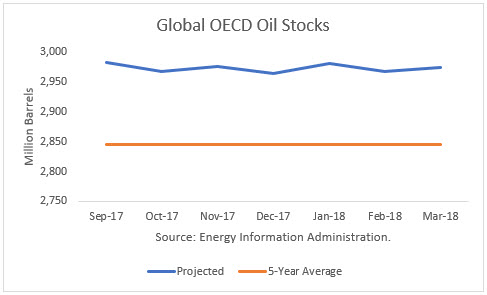
The Energy Information Administration (EIA), International Energy Agency (IEA) and Organization of Petroleum Exporting Countries (OPEC) each released their monthly global oil assessments and projections. They agree that the global oil glut will not be whittled down to anywhere near OPEC’s target of the 5-year OECD average by year-end. Their numbers also imply that global inventories in 1Q18 will build.

The EIA numbers indicate that stocks will be 130 million above the average, just slightly below September’s estimate at end-March.

Global Oil Inventory

OPEC does not project its own production, and it, therefore, does not produce future global inventory levels. But assuming September OPEC production for 4Q17 and 1Q18, stocks will drop by 51 million barrels in 4Q17 and rise by 74 million in 1Q18, a net gain in inventories from September. Continue reading "Oil Price 'Risk Premium' to Play Out Over 4Q17"

Commodities: Time For A Strategy Shift

Lior Alkalay - INO.com Contributor


Commodity prices are facing a shift. As inflation heats up and growth stabilizes, the commodity arena is gradually tilting in favor of growth-oriented commodities such as Oil and Copper Meanwhile, commodities associated with inflation protection, e.g., Gold and Silver, are not only losing their allure but face growing sell pressure.

The thought of selling precious metals just as inflation is showing signs of coming back may sound counter-intuitive. After all, precious metals are one of the more well-known methods of hedging against inflation. So, why are precious metals tanking just as inflation is coming back?

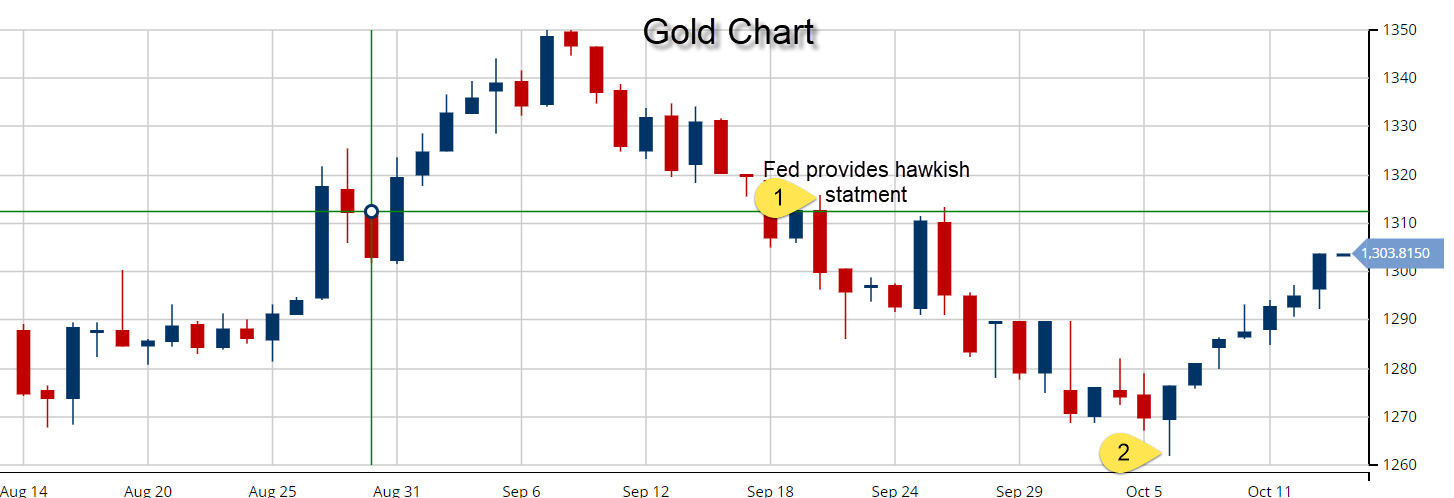
Because the capacity of precious metals as an inflation protection method emerges when investors believe that inflation is understated in the official numbers. When inflation becomes fact, we begin to see the classic, "buy on rumor, sell on fact" response; i.e., investors start selling precious metals. Since Gold and Silver do not pay interest, their investment appeal decreases when rates rise. But, when inflation is under-reported, effective rates are lower and the value of the currency, in our case the Dollar, is eroded. And, in this case, precious metals gain appeal for preserving value and as an alternative investment. That would explain Gold’s price surge from July $1,210 an ounce in July to $1,350 in September, when US headline inflation numbers caught the market off guard with a fall to from 2.7% in February to 1.6% in June, meaning inflation was understated.

This dynamic also explains the fire sale that hit precious metals in the aftermath of the Fed's September rate decision. The Fed signaled a rate hike as soon as December and another three in 2018. Gold responded by shedding 3.6% in two weeks.

Gold
Chart courtesy of MarketClub.com

All the while, the rest of the commodities space was holding rather well in the face of higher rates. In fact, in aggregate, excluding precious metals, commodities prices were gaining. One good example is the iShares S&P GSCI Commodity-Indexed Trust ETF (GSG), which embodies exposure to the broad commodities market from energy and agriculture to precious metals and gained 0.54% during Gold's selloff. Continue reading "Commodities: Time For A Strategy Shift"

Will The Fed Drop The Hammer On Wells Fargo?

George Yacik - INO.com Contributor - Fed & Interest Rates


A few weeks ago Federal Reserve Chair Janet Yellen made some short – but very direct – comments about one of the big banks under the Fed’s oversight.

“Let me say that I consider the behavior of Wells Fargo toward its customers to have been egregious and unacceptable,” she said at her press conference following the Fed’s September monetary policy meeting. “We take our supervision responsibilities of the company very seriously. And we are attempting to understand what the root causes of those problems are and to address them.”

Now, for a person one of whose job requirements is to always speak cryptically, vague and ambiguously in public – Fedspeak, in other words – to call out one of the largest banks in the country and call its behavior “egregious and unacceptable” is pretty startling. That’s why I believe a major fine – at least $1 billion – against the Wells Fargo & Company (NYSE:WFC) by the Fed is coming.

Not only would it be justified, but certainly not out of line given past Fed penalties against other banks that committed far less “egregious” misdeeds. The fact that all of Wells’s transgressions were highly publicized and committed against consumers – millions of them – makes it even more imperative that the Fed let Wells have it between the eyes.

Let’s look at some recent big fines imposed by the Fed against the banks it regulates: Continue reading "Will The Fed Drop The Hammer On Wells Fargo?"

Gold Update: Triangular Consolidation

Aibek Burabayev - INO.com Contributor - Metals


In the previous Gold & Silver update I warned you about the possible correction ahead. Indeed, both top metals showed weakness, but I didn’t think it would be that severe as we quickly reached seemingly distant supports both in gold and silver. Later I shared with you my concerns about golds outlook as the Fed starts cutting its massive balance sheet this month. This could be a real game changer as market wizards call for another perfect storm for the financial markets. In the charts below I try to model this change for you.

I would like to start with the U.S. 10-year Treasury notes (UST) chart as this instrument has a strong relationship with gold, which I already showed you in August.

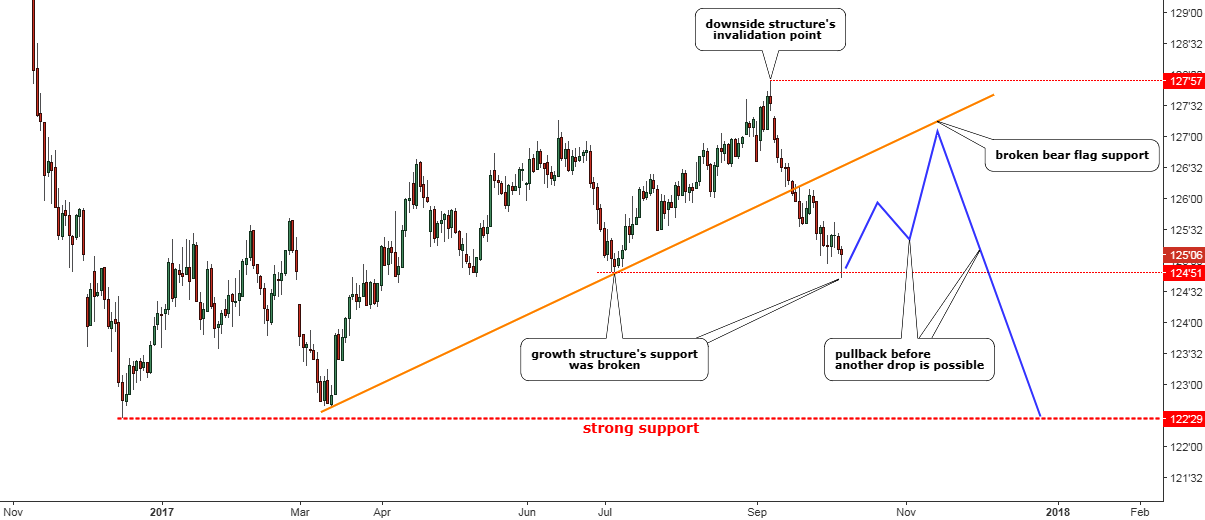
Chart 1. U.S. 10-year Treasury Notes Daily: Bear Flag Works Out

U.S. 10-year Treasury Notes Daily
Chart courtesy of tradingview.com

Above is an updated and zoomed in chart from my last post. I chose a daily time frame to focus on the tactical move to see how the chart structure of the instrument develops over the time. Continue reading "Gold Update: Triangular Consolidation"