World Oil Supply And Price Outlook, June 2020

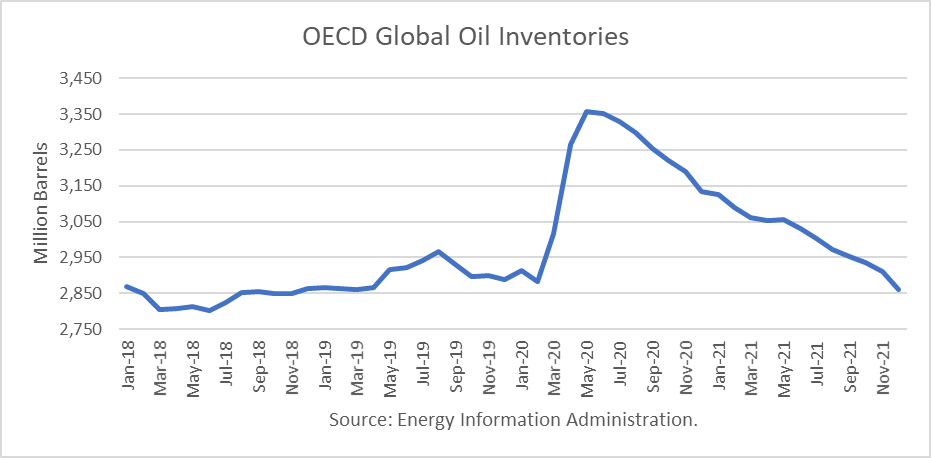
The Energy Information Administration released its Short-Term Energy Outlook for June, and it shows that OECD oil inventories likely bottomed June 2018 at 2.802 billion barrels. It estimated stocks built by 94 million barrels in May to end at 3.358 billion, 442 million barrels higher than a year ago.

For 2020, OECD inventories are projected to build by 243 million barrels to 3.133 billion. For 2021 it forecasts that stocks will draw by 273 million barrels to end the year at 2.860 billion.

Oil

The EIA forecast was made after the OPEC+ decision to cut production and exports. According to OPEC’s press release: Continue reading "World Oil Supply And Price Outlook, June 2020"

Is The V-Shaped Recovery Back On?

Several months, or was it years ago; when the coronavirus began its spread across the U.S., several bullish economists were predicting a “V-shaped” recovery, meaning the expected economic recession would be deep but short-lived. The subsequent bounce-back would be extremely strong so that the 2020 recession would be a mere blip on the chart. That consensus opinion was quickly replaced by talk of a “U-shaped” or even an “L-shaped” recovery, with the economy reeling for months if not years, as the number of deaths escalated along with the unemployment filings as the U.S. economy remained shut down.

Now it’s starting to appear that maybe the doomsayers were a bit too hasty in their gloomy prognostications. While it’s far too early to predict how things will eventually play out, the V-shaped recovery may actually be a more likely outcome than the more pessimistic scenarios. Certainly, the most recent economic reports, from both the government and the private sector, are already showing a nascent rebound even as many key states – like New York, California, and Illinois – remain largely in lockdown mode and only recently started to open up. At the same time, some previous forecasts are being shown to have been overly bearish.

Probably the biggest surprise to the upside was last Friday’s May employment report, which showed the economy adding 2.5 million jobs, a far cry from the consensus forecast of a loss of 7.7 million, and April’s loss of nearly 21 million jobs. “These improvements in the labor market reflected a limited resumption of economic activity that had been curtailed in March and April due to the coronavirus (COVID-19) pandemic and efforts to contain it,” the Labor Department said. Continue reading "Is The V-Shaped Recovery Back On?"

The Fed Is Buying These ETFs And Why It Matters (Part 1)

The Federal Reserve is doing everything it can right now to help prop up the US economy and minimize the impact of the Covid-19 pandemic has on the economy, including purchasing ETFs.. The Fed has, by almost all market participants' views, acted very quickly, very aggressively, and rather decisively in their attempt to limit both the short and long-term effects this pandemic has on the US economy, despite the country permanently shutting down for nearly two months.

The first move by the Fed was to reduce interest rates by lowering the Federal Funds rate. Then, they began buying Treasury Bonds and mortgage-backed securities, (they have of course performed a number of other 'lending' type activities that have lower rates for lending and made it easier for more money to flow into the system, but for the average person knowing that the Fed lowered interest rates and started buying Treasury bonds and mortgage-backed securities, that is really the gist of it. To read more about the exact things they have done, check this article out.) Both these moves the Fed has done in the past, so no surprise there when they announced their plans.

However, in an attempt to pump liquidity back into the market, maintain low-interest rates, give business leaders and consumers the confidence they need to continue spending the Fed is now also buying Exchange Traded Funds.

Why are they buying ETFs and not something else? Continue reading "The Fed Is Buying These ETFs And Why It Matters (Part 1)"

Options Trading - Diagonal Put Spreads

Balancing the trade-offs between risk and reward is front and center even as the markets recover from the depths COVID-19 induced sell-off. Options trading can offer the right balance between risk and reward while providing a margin of downside protection and a statistical edge. Proper portfolio construction and optimal risk management are essential when engaging in options trading as the main driver for portfolio results. One of the main pillars when building an options-based portfolio is maintaining a significant portion of cash-on-hand. This cash position provides the ability to rapidly adapt when faced with extreme market conditions such as COVID-19 and Q4 2018 sell-offs. The COVID-19 pandemic is a prime example of why maintaining liquidity, risk-defining trades, staggering options expiration dates, trading across a wide array of uncorrelated tickers, maximizing the number of trades, appropriate position allocation and selling options to collect premium income are keys to an effective long-term options strategy.

Minimizing Risk and Maximizing Return

Leveraging a minimal amount of capital and maximizing returns with risk-defined trades optimizes the risk-reward profile. Whether you have a small account or a large account, a defined risk (i.e., put spreads and diagonal spreads) strategy enables you to leverage a minimal amount of capital which opens the door to trading virtually any stock on the market regardless of share price such as Apple (AAPL), Amazon (AMZN), Chipotle (CMG), Facebook (FB), etc. Risk-defined options can easily yield double-digit realized gains over the course of a typical one month contract (Figures 1, 2, and 3).

Options
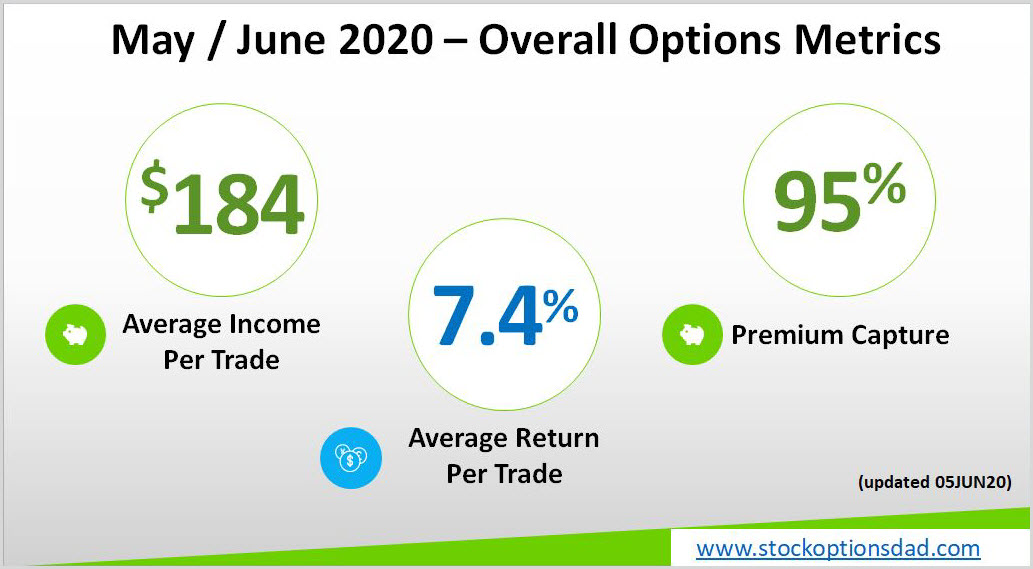
Figure 1 – Average income per trade of $184, the average return per trade of 7.4% and 95% premium capture over 38 trades in May and June
Continue reading "Options Trading - Diagonal Put Spreads"

Gold Falls As Silver Misses Target

Both top metals couldn’t sustain the growth, although silver was more convincing than gold this time again.

Let’s start with the updated gold chart below.

gold
Chart courtesy of tradingview.com

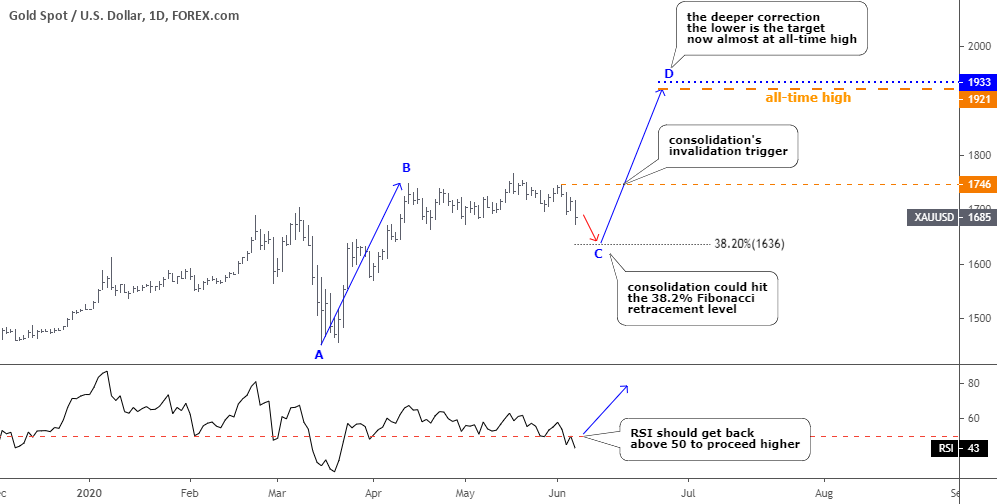
Gold is still consolidating as it couldn’t overcome not only the nearest peak of $1766 but it also failed right at the top of the AB segment of $1748. The RSI dipped into the bearish zone below the crucial 50 level. So, it’s the right time to put our classic instrument called Fibonacci retracement level as gold watches ground while both feet are in the air. The first important 38.2% Fibonacci retracement level could offer support at $1636. Continue reading "Gold Falls As Silver Misses Target"